 iVIGA Faucet Online Shop

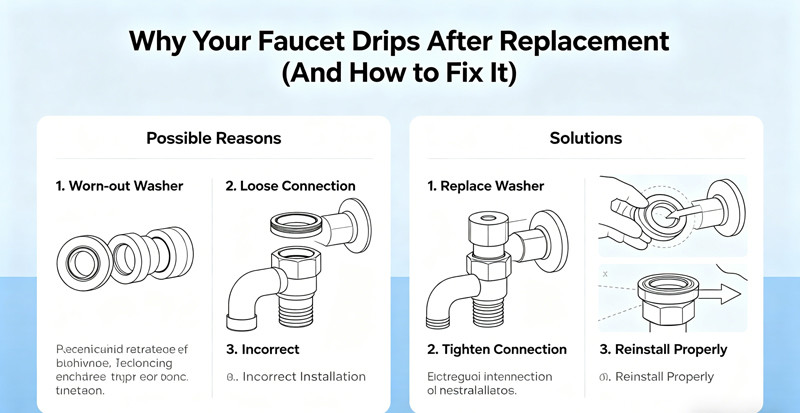
Replacing a faucet usually feels like the end of a problem—especially if the old one was leaking or constantly annoying. So it’s frustrating when a brand-new faucet still drips after installation. The good news is that this is a common issue, and in most cases, it doesn’t mean the faucet is defective.
A dripping faucet after replacement usually comes down to installation errors, pressure issues, or small internal components that aren’t seated properly. Let’s break down the real reasons this happens and what you can do about it.
1. Air and Residual Water in the Line
One of the simplest explanations is trapped air or leftover water in the plumbing line. After installation, your pipes are not immediately “cleaned out,” and water can behave unpredictably for a short time.
You may notice:
- Intermittent dripping right after turning water on
- Spitting or sputtering flow
- Drips that stop after a few minutes or hours
This is especially common if you shut off the main water supply during installation. Air pockets can temporarily disrupt steady flow and cause small drips from the spout.
What to do:
Run both hot and cold water for a few minutes. This helps push air out of the system. In many cases, the dripping stops naturally once pressure stabilizes.
2. Cartridge Not Fully Seated
Modern faucets usually rely on a cartridge system to control water flow and temperature. If the cartridge isn’t installed correctly or fully tightened, water can slowly leak through even when the handle is turned off.
Common installation mistakes include:
- Misaligned cartridge orientation
- Loose retaining nut
- Debris trapped inside the valve housing
Even a tiny misalignment can prevent a perfect seal.
Fix:
Turn off the water supply again, disassemble the handle, and remove the cartridge. Check for:
- Dirt or mineral particles
- Worn rubber O-rings
- Incorrect positioning
Reinsert it carefully according to the manufacturer’s alignment marks.
3. O-Rings or Washers Not Properly Sealed
Inside most faucets are small rubber components like O-rings and washers. These create watertight seals between metal parts.
If they are:
- Twisted
- Pinched
- Dry
- Or missing lubrication
…you can get slow dripping even in a brand-new faucet.
This is one of the most overlooked causes after replacement because everything looks “new,” but rubber parts can still be misaligned during assembly.
Fix:
Disassemble the spout or handle section and inspect all rubber seals. Applying a small amount of silicone-based plumber’s grease can help create a proper seal and extend lifespan.
4. Water Pressure Too High
High water pressure is another common cause of post-installation dripping. Even if the faucet is installed perfectly, excessive pressure can force water past seals.
Signs include:
- Dripping even when faucet is off
- Loud pipe noises
- Sudden bursts of water flow
Most residential systems should operate around 40–60 PSI. Anything higher can stress faucet components.
Fix:
- Install a pressure regulator if needed
- Check home water pressure with a gauge
- Adjust the main valve if applicable
5. Faulty or Low-Quality Cartridge
Even new faucets can have manufacturing defects. A slightly damaged or low-quality cartridge may not seal properly from the start.
This is more common in:
- Budget faucets
- Unknown or unbranded models
- Mass-produced units with inconsistent quality control
If everything is installed correctly and the faucet still drips, the cartridge is often the first part to suspect.
Fix:
Replace the cartridge with a compatible, high-quality version from the manufacturer. This is usually inexpensive and solves the issue quickly.
6. Improper Handle Alignment
It might sound minor, but handle alignment matters more than most people realize. If the handle doesn’t fully return to the “off” position, water may continue to seep through the valve.
This can happen when:
- The handle is over-tightened or under-tightened
- The stem is slightly misaligned
- The internal stop mechanism is not engaged correctly
Fix:
Remove the handle and reinstall it carefully. Make sure it fully closes without resistance and sits correctly on the valve stem.
7. Debris Inside the Faucet Body
During installation, small particles like:
- Sand
- Pipe sediment
- Metal shavings from cutting pipes
can enter the faucet body. These particles can prevent valves from sealing tightly.
Even a tiny piece of debris can hold a valve open just enough to cause a drip.
Fix:
Flush the water lines before final installation. If the faucet is already installed, disassemble and rinse internal parts thoroughly.
8. Thermal Expansion and Temperature Changes
Hot water can cause metal and rubber parts inside the faucet to expand slightly. If components are tightly fitted, this expansion can temporarily affect sealing performance.
You may notice dripping:
- After using hot water
- At night when pipes cool down
- During temperature fluctuations
This is usually minor and not a serious defect.
Fix:
In most cases, this resolves on its own. If persistent, check cartridge condition and water pressure.
9. Installation Torque Issues
Over-tightening or under-tightening connections is another common problem.
- Over-tightening can deform rubber seals
- Under-tightening can leave small gaps for leaks
This is especially relevant for supply line connections under the sink.
Fix:
Recheck all fittings using proper hand-tight plus slight wrench adjustment (not excessive force). Always follow manufacturer torque recommendations if provided.
10. The Faucet Is Actually Working Normally (Temporary Drip)
Sometimes what looks like a “drip problem” is actually normal residual drainage. After turning off the faucet, a small amount of water remains in the spout and drips out naturally.
This is especially common in:
- High-arc kitchen faucets
- Pull-down spray faucets
- Long spout designs
How to tell:
- Drip stops after a few seconds or a minute
- No continuous leaking
- No moisture buildup under sink
This is not a defect—just gravity doing its job.
Final Thoughts
A faucet that drips after replacement can be frustrating, but in most cases, the cause is simple and fixable. The most common reasons are:
- Cartridge not seated properly
- O-rings or seals misaligned
- High water pressure
- Debris inside the system
- Minor installation errors
Before assuming the faucet is defective, it’s worth rechecking the internal components step by step. Most issues can be solved in under an hour without replacing the entire unit.
A properly installed faucet should run clean, quiet, and drip-free—so if yours doesn’t, it’s almost always a setup or adjustment issue rather than a permanent fault.