 iVIGA Faucet Online Shop

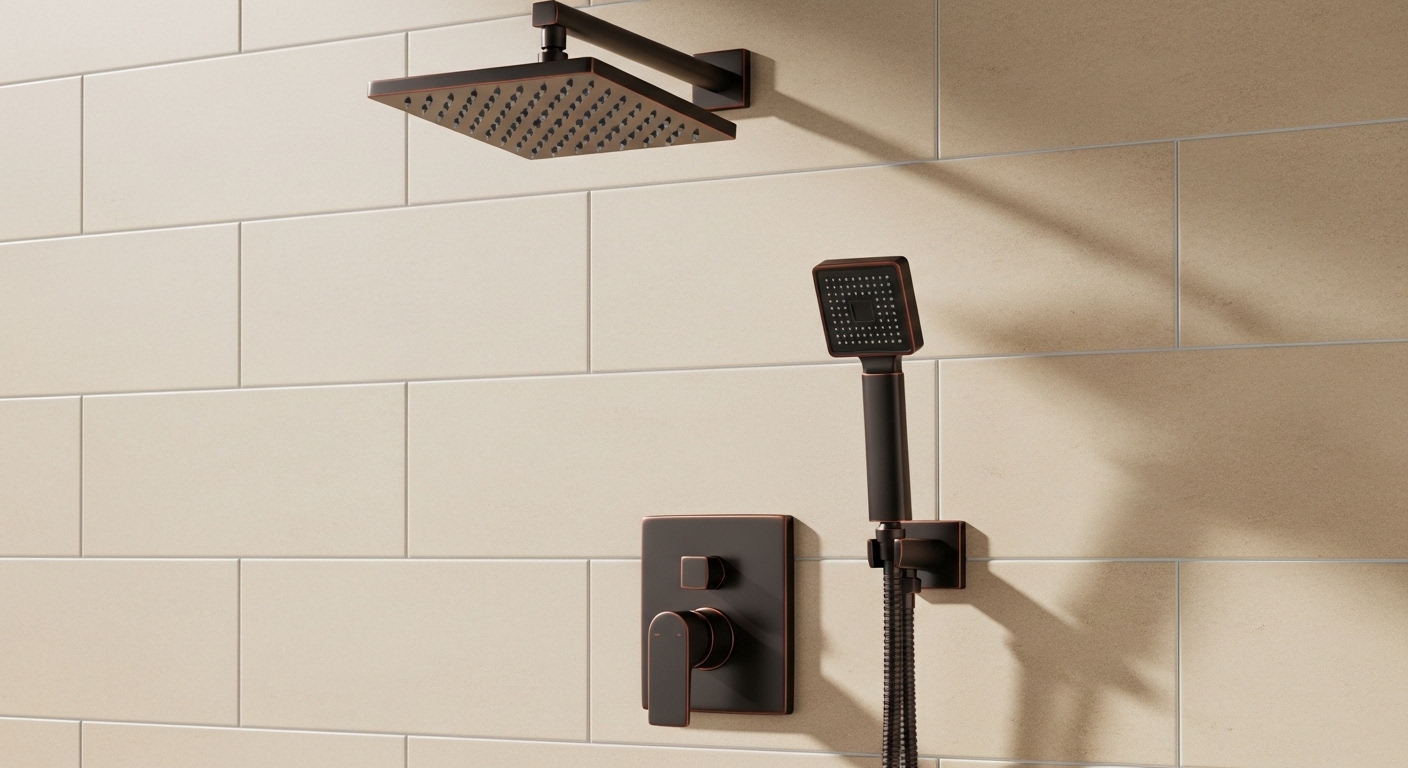
An oil rubbed bronze shower faucet set is one of the easiest ways to give a bathroom a rich, hand-finished look without a full remodel. The deep brown-black tone with subtle copper highlights reads as timeless rather than trendy, and it pairs beautifully with both traditional and transitional bathrooms. But not every set labeled “oil rubbed bronze” is built the same way — some use a genuine living finish over solid brass, while others apply a thin coated layer over zinc alloy that can wear unevenly. Before you buy, it helps to understand exactly what you’re paying for.
At ivigafaucet, we’ve spent years manufacturing and stress-testing shower trim across dozens of finishes, and oil rubbed bronze remains one of the most requested — and most misunderstood. This guide breaks down the components, the finish science, and the buying checklist so you can choose with confidence.
Why Choose an Oil Rubbed Bronze Shower Faucet Set?
An oil rubbed bronze shower faucet set works for homeowners who want warmth and depth instead of the cool, clinical look of chrome or polished nickel. The finish has a slightly variegated, hand-rubbed appearance, meaning high points look lighter and recessed areas look darker. That variation is the point — it’s what gives the fixture its antique, artisanal character.
There are practical reasons to choose it too:
- It hides water spots and fingerprints. Unlike polished chrome, the matte, dark surface doesn’t broadcast every droplet or smudge.
- It coordinates easily. Oil rubbed bronze pairs with cream, beige, sage green, warm wood vanities, and aged brass accents.
- It ages gracefully. A genuine living finish develops a patina over time, so minor wear looks intentional rather than damaged.
- It suits multiple styles. Farmhouse, Mediterranean, craftsman, and transitional bathrooms all welcome the tone.
If you’re weighing it against darker modern options, it’s worth reading our take on the matte black finish in 2026 — the two finishes solve similar problems but send very different style signals.
What’s Actually Included in a Shower Faucet Set
The term “set” causes a lot of confusion at checkout. A true oil rubbed bronze shower faucet set should include the visible trim and the functional valve components needed to run the shower. Here’s what the pieces are and what each one does.
Core Components
- Shower head — fixed wall-mount, ceiling-mount rainfall, or a combination. Common sizes range from 8″ to 12″ for rainfall styles.
- Handheld sprayer — with hose and a slide bar or wall hook; useful for rinsing, cleaning, and accessibility.
- Trim plate and handle(s) — the decorative escutcheon and the lever or knob that controls temperature and flow.
- Tub spout — included in tub-and-shower combo sets, often with a diverter.
- Pressure-balance or thermostatic valve — the rough-in body installed inside the wall. Sometimes sold separately.
- Diverter — routes water between the shower head, handheld, and tub spout.
The single most important question to ask: does the set include the valve body, or only the trim? Many “complete” sets are trim-only and assume you already have a compatible rough-in valve in the wall. If you’re doing new construction or a full retile, you need the valve. If you’re swapping out old trim on an existing valve, you may only need trim — but check brand compatibility carefully.
Valve Types: Pressure-Balance vs. Thermostatic
The valve is the heart of any oil rubbed bronze shower faucet set, and it determines how the shower actually feels to use. Two types dominate the residential market.
| Feature | Pressure-Balance Valve | Thermostatic Valve |
|---|---|---|
| How it works | Maintains a set hot/cold ratio when pressure changes | Maintains a set water temperature directly |
| Anti-scald protection | Yes — prevents pressure-drop temperature spikes | Yes — more precise temperature control |
| Multiple outlets at once | Limited — usually one at a time | Yes — can run rainfall + handheld together |
| Typical cost | Lower | Higher |
| Best for | Standard single-shower-head setups | Spa-style systems with multiple sprays |
For most bathrooms, a pressure-balance valve is perfectly adequate and budget-friendly. If your oil rubbed bronze shower faucet set includes a rainfall head and a handheld you want to run simultaneously, a thermostatic valve with a volume control is the better long-term choice. Either way, look for valves that meet ASSE 1016 anti-scald requirements.
How the Oil Rubbed Bronze Finish Is Made — and How Long It Lasts
Not all oil rubbed bronze is created equal, and the manufacturing method directly affects longevity. There are three broad approaches.
1. Genuine Living Finish
Applied over solid brass, a true living finish is chemically darkened and lightly waxed or oiled. It is intentionally uncoated, so it changes over time — wear points lighten and the rest deepens. Purists love it; if you want a fixture that looks exactly the same in ten years, it isn’t for you.
2. PVD-Coated Bronze
Physical Vapor Deposition bonds a hard, color-stable layer to the substrate at a molecular level. PVD oil rubbed bronze resists scratching, corrosion, and color change far better than older methods. This is the finish we recommend for most buyers, and it’s what we specify on ivigafaucet shower trim because it survives daily cleaning and hard water.
3. Powder-Coated or Painted Bronze
The least expensive method sprays a colored coating over zinc alloy or thin brass. It looks fine on day one but chips at the handle and around the shower arm threads. If a set’s price seems too good to be true, this is usually why.
To understand why coating quality matters so much, see our guide on how to test faucet finish durability, and once your set is installed, follow how to protect faucet finishes and keep them looking new to extend its life.
Buying Checklist: How to Choose the Right Set
Use this checklist before you add an oil rubbed bronze shower faucet set to your cart. It covers the issues that cause the most returns and installation headaches.
- Confirm trim vs. complete. Decide whether you need the valve body or just the trim, and read the listing twice.
- Check valve compatibility. Trim is rarely cross-brand compatible. Match the trim to the exact valve series.
- Verify the substrate. Solid brass valve body and trim outlast zinc alloy, especially in hard-water regions.
- Confirm the finish method. Look for “PVD” or “living finish” language, not just the color name.
- Check flow rate. Shower heads at 1.8 GPM or 2.0 GPM save water; 2.5 GPM is the U.S. federal maximum.
- Look for certifications. NSF/ANSI 61 and 372 for lead content, ASSE 1016 for anti-scald, and a WaterSense label if water efficiency matters to you.
- Confirm rough-in depth. Your valve must fit the wall cavity; check the minimum and maximum finished-wall dimensions.
- Read the warranty. A strong manufacturer backs the finish and the cartridge separately — often a limited lifetime warranty on both.
If you’re still early in the decision process, our list of 5 questions to ask before you buy a faucet applies just as well to shower trim as it does to sink faucets.
Matching Oil Rubbed Bronze to the Rest of Your Bathroom
An oil rubbed bronze shower faucet set rarely lives alone. To make the room feel cohesive, coordinate the finish across the visible hardware: the shower trim, the tub filler if you have one, the sink faucet, towel bars, robe hooks, and even the drain and toilet lever.
You don’t have to match every metal in the room perfectly — designers often mix two finishes intentionally. But oil rubbed bronze works best as the dominant warm tone, with a secondary accent like aged brass or matte black used sparingly. If you’re blending eras, our article on whether you can mix traditional and modern fixtures in a bathroom covers how to keep a layered look from feeling chaotic.
A few pairing tips specific to this finish:
- Tile: Cream, travertine, terracotta, and warm gray subway tile flatter the bronze. Stark cool-white tile can make it look out of place.
- Glass: Frameless or bronze-framed shower glass beats brushed-nickel framing.
- Lighting: Warm 2700K bulbs bring out the copper undertones; cool daylight bulbs flatten them.
Installation Notes and Common Mistakes
Most oil rubbed bronze shower faucet set problems trace back to installation rather than the product itself. A few things to keep in mind.
First, never use a pipe wrench directly on a finished surface — wrap it in a cloth or use the trim’s setscrew points. The most common finish damage we see on returned units is wrench marks on the shower arm and trim ring. Second, use plumber’s tape on threaded connections but keep it off the visible faces. Third, flush the supply lines before installing the cartridge; construction debris is a leading cause of early cartridge failure and leaks.
If your set includes a handheld sprayer, mount the slide bar into solid blocking or wall anchors rated for the load — a sprayer that pulls loose can crack tile. And once everything is running, give the new shower head a periodic cleaning; mineral buildup affects spray pattern and pressure. Our guide on how to maintain and clean your shower head walks through a safe descaling routine that won’t harm the bronze finish.
Oil Rubbed Bronze vs. Other Popular Shower Finishes
To put the finish in context, here’s how an oil rubbed bronze shower faucet set compares with the other finishes buyers cross-shop most often.
| Finish | Look | Hides Water Spots | Style Fit | Maintenance |
|---|---|---|---|---|
| Oil Rubbed Bronze | Warm, dark, hand-finished | Excellent | Traditional, transitional, farmhouse | Low |
| Matte Black | Bold, modern, uniform | Good | Contemporary, minimalist | Low to moderate |
| Brushed Nickel | Soft, warm-gray, satin | Good | Versatile, transitional | Low |
| Polished Chrome | Bright, reflective, cool | Poor | Classic, clean, budget | Higher |
| Brushed Gold | Warm, luxe, satin | Good | Glam, modern luxury | Moderate |
The takeaway: oil rubbed bronze is the strongest pick when you want warmth, low visible maintenance, and a finish that flatters a classic or layered bathroom. If your space leans strictly modern, matte black or brushed gold may suit better — but for the broad transitional middle, bronze is hard to beat.
Author Note & Brand Credibility
Written by the ivigafaucet product content team. Our writers work directly with our engineering and quality-control departments, who finish-test shower trim against salt-spray corrosion, abrasion, and thermal-cycling standards before any set ships. ivigafaucet has manufactured bathroom and kitchen fixtures for over a decade, supplying both retail customers and trade installers. Every oil rubbed bronze shower faucet set we sell uses solid-brass valve bodies, PVD finishing, and ceramic-disc cartridges, and is backed by a limited lifetime warranty on the finish and the cartridge. Product specifications reflect current ivigafaucet catalog standards and U.S. plumbing code requirements as of 2026; always confirm local code with a licensed plumber.
FAQ
Does an oil rubbed bronze shower faucet set come with the valve, or just the trim?
It depends entirely on the listing. Some sets are “complete” and include the rough-in valve body; many are “trim only” and assume a compatible valve is already in the wall. Always confirm before purchasing — and remember trim is generally not cross-brand compatible with another manufacturer’s valve.
Will the oil rubbed bronze finish fade or change color over time?
A PVD-coated oil rubbed bronze finish is color-stable and resists fading, corrosion, and scratching for years. A genuine “living finish” is intentionally uncoated and will develop a patina, lightening at wear points. Powder-coated or painted bronze is the type most prone to chipping. Check which method the manufacturer uses.
Is oil rubbed bronze out of style in 2026?
No. While matte black has dominated modern bathrooms, oil rubbed bronze remains a staple for traditional, transitional, farmhouse, and Mediterranean designs. Because it reads as a classic rather than a trend, it tends to stay relevant far longer than fashion-driven finishes.
How do I clean an oil rubbed bronze shower faucet set without damaging it?
Use a soft cloth with mild soap and water, then dry it. Avoid abrasive pads, ammonia, bleach, and acidic descalers on the finish itself. For mineral buildup on the shower head, soak only the spray face in a diluted vinegar solution and keep it off the surrounding trim.
What flow rate should I look for in the shower head?
The U.S. federal maximum is 2.5 GPM. Many modern heads run at 1.8 or 2.0 GPM to save water while still feeling full, and WaterSense-labeled models are independently verified for performance. Choose based on your water pressure and how robust you want the spray to feel.
Can I install an oil rubbed bronze shower faucet set myself?
Swapping trim onto an existing compatible valve is a reasonable DIY job with basic tools. Installing a new valve body inside the wall involves soldering or press fittings and is best left to a licensed plumber, especially where permits and anti-scald code apply.