 iVIGA Faucet Online Shop

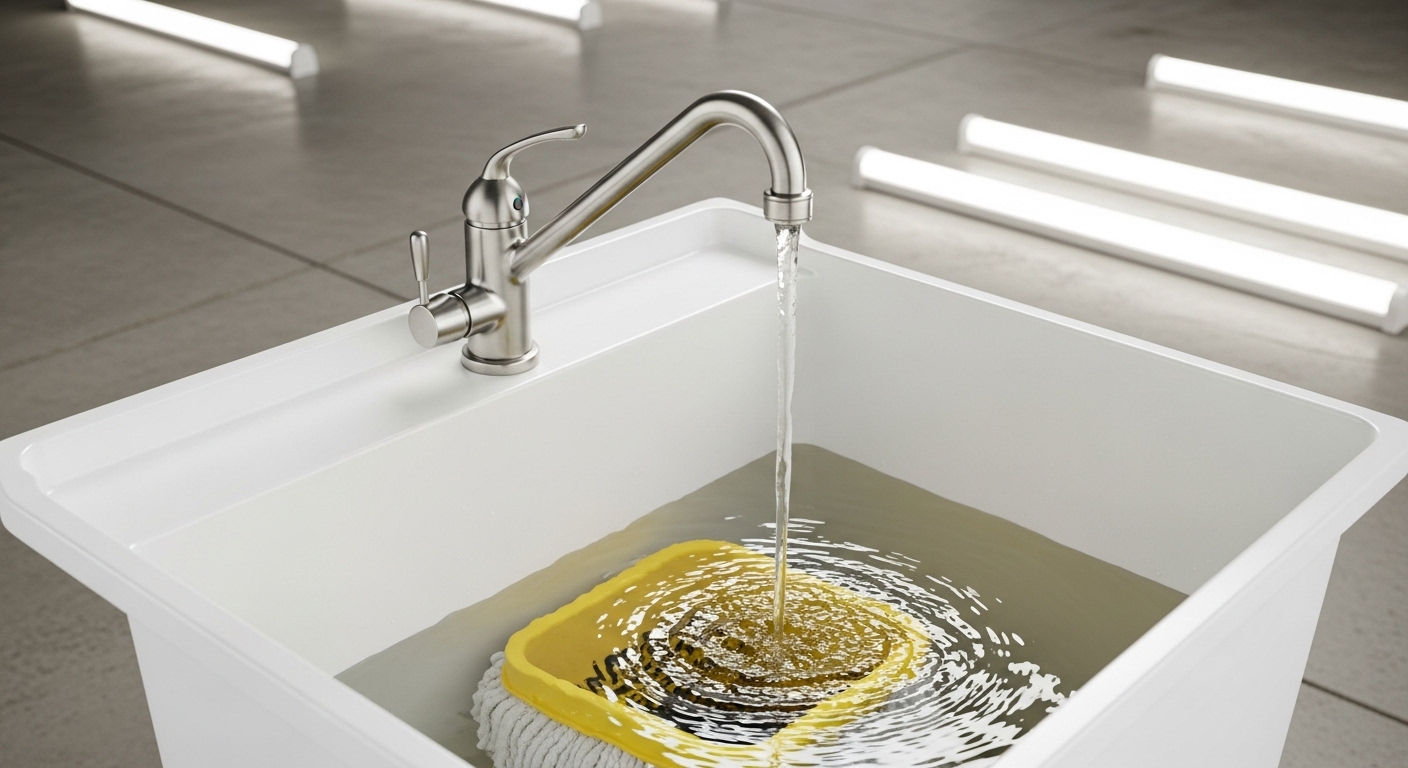
If you manage a property, run a small commercial operation, or stock fixtures for a contracting crew, the single handle utility faucet is one of those quiet workhorses you don’t think about until one fails — and then suddenly you need ten of them by Friday. Unlike a kitchen faucet that’s chosen for aesthetics or a bathroom faucet chosen for guest impression, a utility faucet is chosen for throughput, durability, and serviceability. It has to fill a mop bucket fast, survive a contractor banging a paint tray against it, and keep working in unheated garages where temperatures swing 60 degrees overnight.
At ivigafaucet, we ship utility faucets to laundromats, dental offices, veterinary clinics, multi-family laundry rooms, auto shops, food prep back rooms, and thousands of homeowners who finally got tired of their builder-grade janitor faucet snapping at the stem. This guide walks you through everything a commercial buyer needs to know in 2026 — spec sheet, finish behavior, mounting math, ADA notes, and the comparison tables we wish vendors put on every PDP.
What Exactly Is a Single Handle Utility Faucet?
A single handle utility faucet — sometimes called a service sink faucet, laundry faucet, or janitor faucet — is a mixing faucet designed for high-volume, low-aesthetic environments. The defining trait is a single lever or joystick that controls both volume and temperature with one motion, which matters when your other hand is holding a bucket, a soiled rag, or a length of dirty PVC pipe.
Compared to a residential kitchen faucet, the single handle utility faucet typically features:
- Higher flow rates — 2.2 GPM is common, with commercial models pushing 2.5 GPM where local code allows.
- Taller, simpler spouts — gooseneck or high-arc designs that clear a 5-gallon bucket without a swivel aerator getting in the way.
- Heavier brass bodies — often forged rather than cast, with thicker wall sections to survive impacts.
- Ceramic disc cartridges rated for 500,000+ cycles — because a laundromat or commercial kitchen will hit a residential rating in 18 months.
- Hose-thread or threaded male outlets — so you can attach a fill hose, a vacuum breaker, or a quick-connect adapter.
Functionally, the single handle utility faucet sits in a category between a hose bibb and a true commercial pre-rinse faucet. It’s the right answer when you need temperature control and reasonable looks but don’t need (or want to pay for) a coiled stainless spring spout overhead.
Mounting Configurations: Wall, Deck, and Centerset
The first specification question on any utility faucet order is mounting type. Get this wrong and you’ll be returning units or drilling new holes in a brand-new sink.
Wall-Mount Utility Faucets
Wall-mount is the historical standard for service sinks. The faucet body bolts to a backplate or directly to capped supply stubs coming out of the drywall, typically on 8-inch centers (the universal commercial spec). Wall-mount is the right choice when:
- You’re feeding a floor-mounted mop sink with no deck.
- You want the faucet up and out of the way of bucket handles and contractor tools.
- Supply lines already exit the wall (common in 1970s–1990s commercial buildings).
- You need a vacuum breaker stack above the spout for cross-connection compliance.
Deck-Mount (Single Hole and 4-Inch Centerset)
Deck-mount utility faucets bolt through one or three holes in the rim of a laundry tub or utility sink. Most modern utility sinks ship with a 1-hole or 3-hole 4-inch centerset configuration. Deck-mount is generally easier to retrofit into a residential laundry room because the supply lines already come up through the cabinet floor with standard angle stops.
Bridge-Mount and Two-Handle Adapters
Less common, but worth mentioning: some deep utility sinks in light commercial settings still use a two-handle bridge, but the single-handle conversion is increasingly popular because it cuts service calls. If you’re swapping a worn-out two-handle service faucet, a single handle utility faucet with a 4-inch base plate (escutcheon) will cover the old hole pattern.
Spout Reach, Height, and Why They Matter More Than You Think
For a utility faucet, geometry is everything. The standard mistake is buying a faucet by finish and brand without checking the spout reach against the sink’s interior dimensions. Here’s the rule of thumb we give wholesale buyers at ivigafaucet:
- Spout reach (horizontal distance from base to aerator tip) should land the stream within the middle third of the basin — not on the back wall, not at the front lip.
- Spout height (vertical clearance from deck to underside of spout) should accommodate the tallest bucket or container you’ll fill. For a standard 5-gallon bucket, you need at least 12 inches of clearance.
- Swivel range matters when one faucet serves a double-basin utility sink. Look for 360-degree rotation on commercial models.
One of the most common service tickets we see is splashing — water bouncing out of a shallow utility sink because the spout sits too high or aims too steeply. If you’re working with a deeper basin, our companion guide on how to avoid splashing with deep sink faucets covers aerator selection and stream angle in detail.
Comparison Table: Single Handle Utility Faucet Types at a Glance
| Type | Best For | Typical Spout Height | Typical Flow (GPM) | Price Range (USD) | Service Life |
|---|---|---|---|---|---|
| Wall-Mount Commercial | Mop sinks, janitor closets, commercial kitchens | 10–14 in | 2.2–2.5 | $95–$280 | 15–20 yrs |
| Deck-Mount Gooseneck | Residential laundry, garage workshops | 12–16 in | 1.8–2.2 | $65–$180 | 10–15 yrs |
| Deck-Mount with Pull-Down | Pet wash stations, dual-use laundry/utility | 14–18 in | 1.8 | $120–$240 | 8–12 yrs |
| Bar/Prep Style Utility | Small commercial back rooms, dental offices | 8–11 in | 1.5–1.8 | $70–$160 | 10–15 yrs |
| Heavy Industrial | Auto shops, agriculture, lab pre-wash | 12–16 in | 2.5+ | $200–$450 | 20+ yrs |
Finish Selection for Utility Environments
In a laundry room or commercial back-of-house, finish is about durability first and looks second. The order of preference we recommend to property managers buying in bulk:
Brushed Stainless and Brushed Nickel
Brushed finishes hide water spots, fingerprints, and the inevitable scuffs from passing carts. They are forgiving of hard water and easy to clean with a microfiber cloth. If you’re wondering whether brushed nickel still belongs in a 2026 spec, our deep dive on brushed nickel finish in 2026 walks through where it still wins and where matte black has overtaken it.
Chrome
Chrome is still the workhorse finish for commercial utility faucets because it’s the cheapest durable PVD option, it sanitizes easily, and replacement parts are universal. The downside: chrome shows water spots fast and can flake under chloride-heavy cleaning chemicals. If you have an existing chrome faucet with adhesion failure, see our guide on how to fix chrome finish peeling off before you replace the whole unit.
Matte Black
Matte black has moved from boutique residential into light commercial — dental offices, boutique pet groomers, design-forward laundromats. It hides limescale better than chrome and has surprisingly good chemical resistance when the coating is true PVD rather than painted. The premium is real, but in a customer-facing space, it’s often worth it.
Oil-Rubbed Bronze
Less common in true utility settings, but increasingly specified for rustic commercial environments like brewery taprooms or farm-stand wash stations. It’s a living finish that develops patina with use, which is either a feature or a maintenance headache depending on your perspective.
Cartridge Technology and Long-Term Serviceability
The single biggest predictor of total cost of ownership on a utility faucet is the cartridge. A $300 utility faucet with a proprietary cartridge that goes out of production in three years is a worse investment than a $120 faucet using an industry-standard ceramic disc cartridge.
Look for these specifications on the cut sheet:
- Ceramic disc cartridge rated for at least 500,000 cycles (commercial-grade models hit 1,000,000).
- NSF/ANSI 61 and NSF/ANSI 372 certification for lead-free wetted surfaces.
- ASME A112.18.1 / CSA B125.1 compliance for North American plumbing code.
- Replaceable cartridge with a standard removal tool (no proprietary $40 wrenches).
- Available stem extension kits for wall-mount models where finished wall thickness varies.
If a faucet starts to drip after a cartridge replacement — a common headache in older utility setups — the issue is usually a seat or spring rather than the cartridge itself. Our diagnostic walkthrough on why your faucet drips after replacement covers the five most common causes and the fix for each.
ADA, Code Compliance, and Vacuum Breakers
If your utility faucet is going into any space accessible to the public, ADA compliance matters. The single handle utility faucet is inherently more ADA-friendly than a two-handle equivalent because lever operation requires less than 5 pounds of force and no twisting of the wrist. But a few details still trip up buyers:
- Lever length — must be operable with a closed fist; very short stub levers fail this test.
- Hot/cold indication — must be visually distinct (red/blue indicators or a clearly directional lever motion).
- Reach over the basin — must not exceed 11 inches if the user is required to lean over a counter.
For mop sinks and any faucet with a threaded hose outlet, you’ll need a vacuum breaker (atmospheric or pressure type) to prevent backflow into the potable water supply. This is a code requirement under the IPC and UPC, not optional. Commercial-grade single handle utility faucets often integrate the vacuum breaker into the spout or supply riser.
Water Efficiency Without Sacrificing Throughput
There’s tension in the utility faucet category between code-mandated water efficiency and the practical need to fill buckets fast. A 1.5 GPM lavatory faucet would double the time to fill a 5-gallon mop bucket. Most utility faucets are exempt from the strictest residential flow caps, but you still want to verify the GPM rating against your operational tempo.
If your facility is on a sub-metered water bill, the math on flow versus fill time is worth running. We cover the diagnostic methodology in our guide on how to tell if a faucet is truly water-saving — including how aerator pattern and pressure compensation interact with rated flow.
Installation Specifications for Buyers and Specifiers
When you’re sourcing a single handle utility faucet at volume, your installer or property maintenance crew will want a clean spec sheet. Here’s the minimum data you should require from any vendor:
- Inlet thread (1/2 in NPT, 3/8 in compression, or 1/2 in IPS).
- Outlet thread or aerator size (15/16 in–27 male is the U.S. standard for hose adapters).
- Pressure rating in PSI (most utility faucets are rated to 125 PSI working, 500 PSI burst).
- Maximum supply temperature (typically 180°F for commercial brass bodies).
- Center-to-center dimension for wall-mount models (8-inch is standard, but verify).
- Required deck thickness range for deck-mount models (usually 0.75–1.5 in).
- Warranty terms — minimum 5 years on commercial cartridges, 10+ years on finish.
Total Cost of Ownership: Why the Cheapest Faucet Isn’t the Cheapest
The most expensive utility faucet you’ll ever buy is the $39 builder-grade unit you have to replace every three years, because every replacement comes with a service call, water shutoff, and downtime. A property manager running 60 laundry rooms across a multi-family portfolio will save tens of thousands over a decade by standardizing on a mid-tier single handle utility faucet with a serviceable cartridge and a real finish warranty.
Our procurement spreadsheet for commercial buyers looks at six factors:
| Cost Factor | Cheap Faucet (~$45) | Mid-Tier (~$130) | Commercial (~$280) |
|---|---|---|---|
| Unit cost | $45 | $130 | $280 |
| Expected service life | 2–4 years | 8–12 years | 15–20 years |
| Cartridge replacements over 10 yrs | 3–4 | 1 | 0–1 |
| Service labor (avg $85/visit) | $340 | $85 | $0–85 |
| Finish failure / refinish | Likely by year 3 | Unlikely | Covered by warranty |
| 10-year total cost | $420+ | $215 | $280–365 |
The mid-tier and commercial tiers both beat the cheap option on a 10-year horizon, with the commercial tier winning if you have any customer-facing exposure or need finish longevity.
Finish Care and Long-Term Maintenance
Utility faucets see harsh cleaners — bleach, ammonia, citric acid descalers, and the occasional splash of solvent. The single biggest predictor of finish longevity is what your janitorial team is allowed to spray on the faucet. We strongly recommend posting a cleaning protocol next to every commercial utility sink. Our maintenance guide on protecting faucet finishes goes into the specific chemical sensitivities of each finish family — it’s worth printing and laminating.
For routine maintenance, a quarterly check on aerator buildup, cartridge play, and supply connection drips will catch 90% of failure modes before they become emergencies.
Author Note and About ivigafaucet
This guide was authored by the ivigafaucet product engineering team and reviewed by our commercial sales lead, who has spent over a decade specifying fixtures for multifamily, hospitality, and light commercial projects across North America. All ivigafaucet utility faucets are tested to ASME A112.18.1 / CSA B125.1 and certified to NSF/ANSI 61 and NSF/ANSI 372 for lead-free compliance. Our commercial line ships with a 10-year finish warranty and a lifetime cartridge warranty. We’ve been manufacturing and distributing faucets and bathroom fixtures since the early 2010s, with thousands of commercial accounts ranging from boutique hotels to national laundromat chains.
Before you finalize a faucet purchase — utility or otherwise — it’s worth running through the diagnostic checklist in our short read on 5 questions to ask before you buy a faucet. Two minutes saves a return shipment.
FAQ
What is the difference between a utility faucet and a laundry faucet?
The terms are often used interchangeably, but in trade usage, “laundry faucet” usually refers to a residential deck-mount fixture for a laundry tub, while “utility faucet” includes wall-mount, mop sink, and light commercial variants. A single handle utility faucet covers both use cases when sized correctly.
Can I install a single handle utility faucet in place of a two-handle model?
Yes, in most cases. If your existing sink has a 4-inch centerset hole pattern, choose a single-handle model with an included escutcheon (cover plate) that spans the outer hole spacing. For 8-inch wall-mount installations, single-handle bodies are available with matching center dimensions, but verify the inlet threads and rough-in depth before ordering.
What flow rate do I need for a commercial mop sink?
For mop bucket filling and general janitorial use, target a minimum of 2.2 GPM at 60 PSI. Lower flow rates dramatically increase fill times and become a labor cost in high-turnover settings. Verify that your local code permits the chosen flow rate — most utility faucets are exempt from residential lavatory caps.
Do I need a vacuum breaker on my utility faucet?
If the faucet has any threaded hose outlet — which most utility faucets do — yes. Vacuum breakers prevent backflow contamination into the potable water supply and are required by the International Plumbing Code (IPC) and Uniform Plumbing Code (UPC). Many commercial single handle utility faucets include an integrated atmospheric vacuum breaker.
How long should a quality utility faucet last in commercial use?
A properly specified commercial-grade single handle utility faucet should provide 15–20 years of service before major rebuild, with cartridge replacement every 8–12 years depending on usage cycles and water quality. Hard water or aggressive cleaners shorten the interval; quarterly aerator cleaning extends it.
Are all utility faucets lead-free?
Faucets sold legally in the United States must comply with the Reduction of Lead in Drinking Water Act (no more than 0.25% weighted average lead content on wetted surfaces). Look for NSF/ANSI 372 certification on the spec sheet. If you’re sourcing internationally or installing a faucet from gray-market inventory, verify documentation — and review our guide on how to remove lead from faucets safely for older installations.
What finish holds up best in a high-use utility environment?
Brushed stainless and chrome both perform exceptionally well under heavy cleaning. Brushed stainless hides water spots and minor scratches better, while chrome is more universal for parts replacement. Matte black PVD finishes have improved dramatically and are now viable in commercial settings, though the premium per unit is real.