 iVIGA Faucet Online Shop

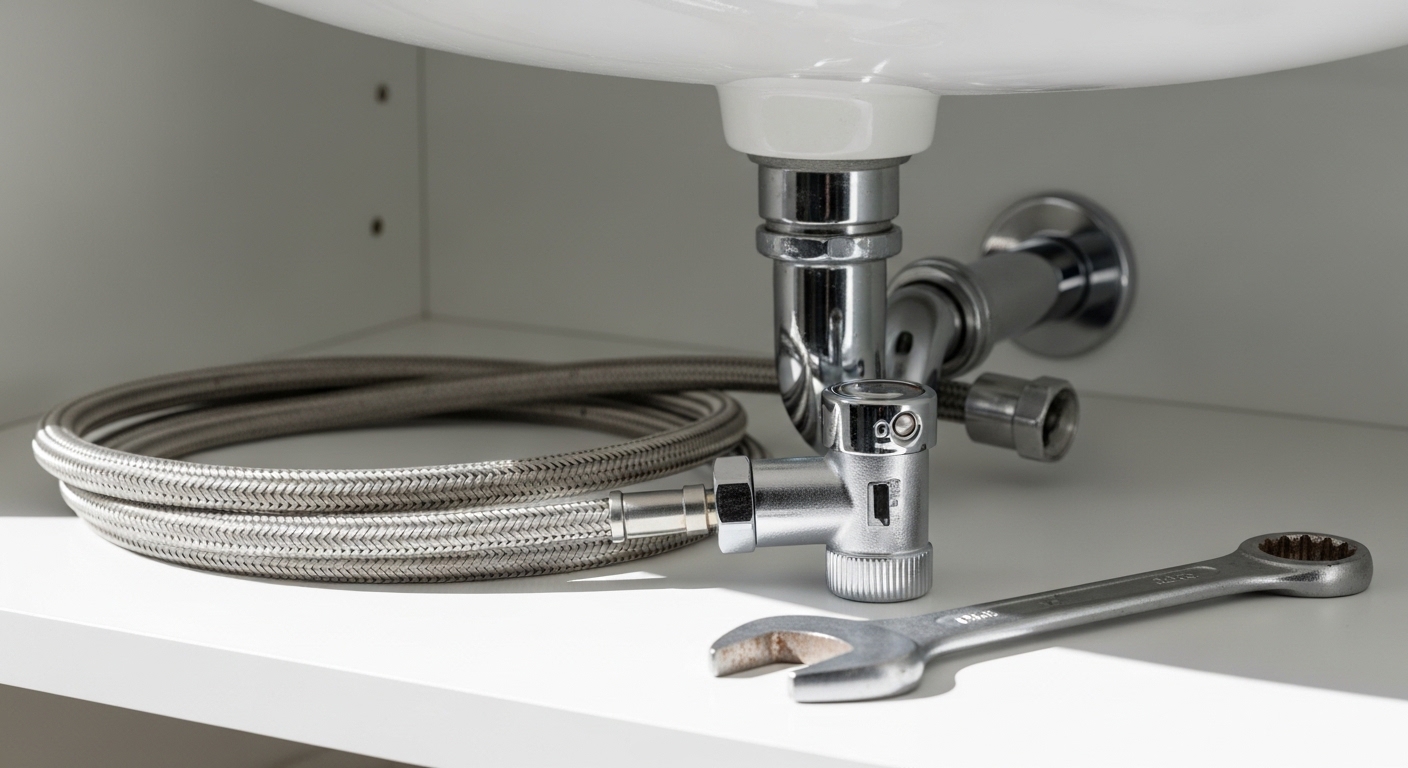
If you’ve just spotted a drip under the sink and you’re frantically searching for a faucet supply line nearby, take a breath — this is one of the easiest plumbing parts to source, and you almost certainly have three or four options within a 15-minute drive. A supply line (also called a faucet connector or flexible hose) is the short, flexible tube that carries water from your shut-off valve up to the faucet tailpiece. They’re cheap, standardized, and stocked nearly everywhere. The trick isn’t *finding* one — it’s grabbing the *right* one so you don’t make two trips.
This guide walks you through where to buy locally, how to identify the exact connector you need before you leave the house, what to pay, and when ordering online actually beats driving around town. We’ll keep it concrete: real sizes, real prices, and the specific scenarios where each option wins.
Where Can I Buy a Faucet Supply Line Near Me Right Now?
You have four reliable local options, and at least one of them is open right now: a big-box home center (Home Depot, Lowe’s, Menards), a neighborhood hardware store (Ace, True Value), a dedicated plumbing supply house, or — in a pinch — a well-stocked Walmart or auto/RV store. All four carry standard braided stainless supply lines that fit the vast majority of residential faucets.
Here’s how they actually differ when you’re standing in the aisle with a leak waiting at home:
- Big-box home centers — The widest selection under one roof. You’ll find every common length (9″, 12″, 16″, 20″) and both compression and faucet-connector ends. Staff are hit-or-miss on plumbing depth, but the bays are clearly labeled. Best for: “I need it today and I’m not 100% sure of my size.”
- Local hardware stores — Smaller selection but far better advice. The person behind the counter has usually fixed the exact problem you have. Best for: “I want someone to confirm I’m buying the right thing.”
- Plumbing supply houses — Pro-grade parts, including no-burst lines with longer warranties and less common sizes. Some are wholesale-only or pricier. Best for: an odd thread size, a high-end faucet, or a landlord buying in bulk.
- Walmart / general retail — Limited to the most common 3/8″ compression lines, but cheap and open late. Best for: a 9 PM emergency on a standard sink.
Whichever you pick, the goal is the same: walk out with a line that matches your valve connection, your faucet connection, and is the right length to run without kinking or pulling tight. Get those three right and installation takes ten minutes.
How Do I Know What Size Faucet Supply Line to Buy Before I Drive Anywhere?
Measure three things before you leave: the valve outlet size, the faucet inlet size, and the distance between them. For most U.S. homes, the answer is a 3/8″ compression connection at the shut-off valve and either a 1/2″ FIP or a faucet-specific connector at the top — and you’ll want a line about 2–4 inches longer than the straight-line distance so it curves gently instead of stretching.
The two ends of a supply line are almost never the same, so identify each separately:
| Connection point | Most common size | What it looks like |
|---|---|---|
| Shut-off valve (bottom) | 3/8″ compression | Small threaded outlet, ~3/8″ across, with a ferrule/nut |
| Faucet inlet (top) — standard | 1/2″ FIP (female iron pipe) | Larger threaded coupling |
| Faucet inlet (top) — modern faucets | Faucet connector (M8 / pre-attached) | Captive nut that threads onto the faucet’s copper tube |
| Length needed | 9″, 12″, 16″, 20″ | Measure valve-to-faucet, add 2–4″ |
If your faucet already has flexible tubes hanging off it (common on modern pull-downs and bathroom faucets), you only need a line that connects the valve to that pre-attached tube — usually a 3/8″ compression × 1/2″ FIP line, or a faucet-connector end sized to the tube. When in doubt, unscrew the old line, bring it to the store, and match it end-for-end. That’s the single most foolproof method and it turns this whole problem into a 30-second aisle comparison.
One sizing mistake people make: buying a line that’s too short and stretching it taut. A supply line under tension stresses both threaded joints and is a leading cause of slow leaks down the road. Always give yourself a gentle loop of slack. If you’re unsure whether your existing connection even matches modern parts, our guide on why you might need a faucet adapter for your sink explains how to bridge mismatched threads without replacing the whole faucet.
Braided Stainless vs. Plastic vs. Copper — Which Supply Line Should I Actually Get?
For almost every homeowner, buy a braided stainless steel supply line — it’s the best balance of burst strength, flexibility, and price, and it’s what most plumbers install today. Skip the cheap reinforced-plastic (PVC) lines for anything you care about, and only choose rigid copper if you specifically want a permanent, no-flex installation.
Here’s the honest breakdown of what you’ll see on the shelf:
| Type | Typical price | Lifespan | Best for |
|---|---|---|---|
| Braided stainless steel | $4–$12 | 8–10+ years | Nearly every sink — the default choice |
| Reinforced PVC / plastic | $2–$5 | 3–5 years | Tight budgets, low-risk spots only |
| Rigid / coated copper | $6–$15 | 20+ years | Permanent installs, exposed runs |
| “No-burst” premium braided | $10–$20 | 10–15 years, longer warranty | Finished basements, hard-to-reach valves |
The braided lines earn their reputation: a thin EPDM rubber core carries the water, and a woven stainless jacket resists the bulging and rupture that eventually kills bare rubber and plastic lines. For a few dollars more, “no-burst” versions add an internal liner that won’t balloon even if the rubber degrades — worth it above a finished ceiling or anywhere a failure means water damage instead of just a puddle.
Copper is the old-school pro choice and lasts decades, but it has to be bent precisely to fit and doesn’t tolerate being flexed repeatedly. If you like the permanence of metal connectors, it’s worth reading whether you really need a copper faucet connector and which one to buy before you commit — for most modern faucets a braided line is genuinely the better call.
How Much Should a Faucet Supply Line Cost Nearby?
Expect to pay $4 to $12 for a single quality braided stainless supply line at any local store, and $8 to $25 for a two-pack covering both hot and cold. Anything under $3 is almost always thin plastic, and anything over $20 for one line is premium no-burst grade — fine if you want it, but not necessary for a standard sink.
Local pricing tends to run a dollar or two above online because of store overhead, but when you factor in shipping and the fact that you can install today instead of in three days, buying nearby is usually the smarter move for a single emergency replacement. Where online wins is when you’re replacing several lines at once, need an uncommon length or thread, or want a specific finish to match an exposed installation.
A practical tip: if you’re already under the sink replacing one line, replace both hot and cold at the same time. They’ve aged identically, the second one costs only a few dollars, and you avoid a repeat trip when the other side fails six months later. While you’re down there, it’s also the perfect moment to inspect the shut-off valves and the faucet washers under the sink that are often the real source of a mystery leak people blame on the supply line.
Should I Buy Locally or Order a Faucet Supply Line Online?
Buy locally if you have an active leak, a standard 3/8″ compression connection, and want it fixed today — that’s 80% of cases. Order online if you need an uncommon size, a matched set, a specific finish, or you simply can’t find a faucet supply line nearby that fits your particular faucet.
Think of it as a quick decision tree:
- Is water actively dripping or sprayed? Go local. Shut off the valve, pull the old line, match it at the nearest store. Speed beats everything.
- Is your connection a common size and you just want a reliable line? Either works — local is faster, online may be a touch cheaper in multipacks.
- Do you have an odd thread, a designer faucet, or a long run? Order online where the full size range lives, and verify both end types before checkout.
- Replacing lines on multiple sinks (landlord, remodel)? Online bulk packs win on price and consistency.
Iviga’s own faucet kits ship with correctly sized braided lines included, which sidesteps the matching problem entirely on a new install. If you’re replacing an old faucet rather than just the line, it’s worth pairing this with our walkthrough on how to remove your old faucet yourself so you handle both jobs in one session under the sink.
How Do I Install a New Faucet Supply Line Once I’ve Got It?
Installing a supply line takes about ten minutes and only needs an adjustable wrench. Shut off the water, disconnect the old line, hand-thread the new one onto both ends, snug it with a wrench, then turn the water back on and check for drips. The most common rookie error is overtightening — these connections seal on a rubber washer or compression ferrule, not on brute force.
- Close the shut-off valve under the sink (turn clockwise until it stops). Open the faucet to release pressure.
- Place a towel and small bucket below — a little water will spill from the old line.
- Unscrew the old line from the faucet inlet first, then the valve, using your wrench to break it loose and your fingers to spin it off.
- Hand-thread the new line onto the faucet inlet, then the valve. Get several turns by hand to avoid cross-threading.
- Tighten with the wrench — about a quarter to half turn past hand-tight. Snug, not gorilla-tight.
- Open the valve slowly and watch both joints for 60 seconds. A bead of moisture means a slightly tighter turn; a dry joint means you’re done.
If you still see a drip after everything’s tight, the culprit is usually a missing or pinched washer, a cracked ferrule on an old valve, or a connection that was over-torqued and deformed. We cover that exact troubleshooting in our guide on why your faucet drips after replacement and how to fix it — it’ll save you from assuming the brand-new line is defective when the real issue is a $0.10 washer.
What Are the Most Common Mistakes When Replacing a Supply Line?
The three mistakes that cause repeat leaks are buying the wrong end size, stretching a too-short line tight, and overtightening the nuts. All three are avoidable in under a minute of attention, and all three are why people end up making a second trip for a “faucet supply line nearby” when the first one should have worked.
- Mismatched ends: The valve end and faucet end are usually different sizes. Confirm both, not just one.
- Too short: A taut line stresses joints and kinks. Buy 2–4″ longer than the straight-line gap.
- Over-torquing: These seal on a washer or ferrule. Quarter-turn past hand-tight is plenty; cranking harder splits the rubber.
- Reusing an old ferrule: On compression valves, a deformed brass ferrule won’t reseal. If the old one looks crushed, that valve may need attention too.
- Ignoring the valve: If the shut-off itself weeps when you open it, the supply line was never the problem — the valve is.
A Quick Note on Quality and Standards
Author note: This guide was written by the Iviga product team, who specify and test the flexible supply lines that ship with our faucet kits. We’ve installed and pressure-tested thousands of these connectors across kitchen and bathroom fixtures.
Why trust Iviga: Iviga (www.ivigafaucet.com) designs and manufactures faucets and bathroom fixtures, and every braided supply line we include is rated to standard U.S. residential water pressure and tested for burst resistance well above normal household levels. When you buy a line locally, look for one that’s certified to recognized plumbing standards (such as cUPC/NSF listing on the packaging) and carries at least a multi-year warranty — that listing is your assurance the rubber core, ferrule, and braid all meet safe-for-potable-water requirements. A line that costs two dollars more but carries a real certification and warranty is the cheapest insurance in your house.
FAQ
What size faucet supply line do most homes use?
Most U.S. homes use a 3/8″ compression connection at the shut-off valve and a 1/2″ FIP coupling at the faucet, on a braided stainless line 9″ to 20″ long. Modern faucets often have a pre-attached tube, in which case you just need a line that connects the valve to that tube. When unsure, unscrew your old line and match it end-for-end at the store.
Can I buy a faucet supply line at a regular hardware store nearby?
Yes. Big-box home centers, neighborhood hardware stores, plumbing supply houses, and even many general retailers stock standard braided supply lines. Hardware stores and plumbing supply houses give better advice; big-box stores give the widest selection of lengths and end types. For a standard 3/8″ compression sink, any of them will have what you need today.
How long do braided stainless steel supply lines last?
A quality braided stainless line typically lasts 8 to 10 years or more, versus 3 to 5 years for cheap plastic lines. “No-burst” premium versions can last 10 to 15 years and usually carry longer warranties. Because the rubber core ages even when the braid looks fine, many plumbers recommend proactively replacing supply lines every decade, especially in finished spaces where a failure means water damage.
Why is my new faucet supply line still leaking?
A new line usually leaks for one of three reasons: a pinched or missing washer at the connection, an overtightened nut that deformed the seal, or a worn ferrule on an old compression valve. Less commonly, the leak is from the shut-off valve itself, not the line. Re-seat the washer, snug the nut only a quarter-turn past hand-tight, and watch which joint actually weeps to pinpoint the source.
Should I replace both hot and cold supply lines at once?
Yes — if one line has failed, the other is the same age and material and will likely fail soon too. The second line costs only a few dollars, you’re already under the sink with the tools out, and replacing both saves you a repeat trip and a second surprise leak. It’s the single easiest way to make this a one-time job.
Is a braided line or a copper connector better for my faucet?
For almost every modern faucet, a braided stainless line is better — it flexes to fit tight cabinets, resists bursting, and costs less. Rigid copper lasts longer and looks cleaner on exposed runs, but it must be bent precisely and doesn’t tolerate repeated flexing. Choose copper only for permanent, visible installations where you don’t mind the extra fitting work.