 iVIGA Faucet Online Shop

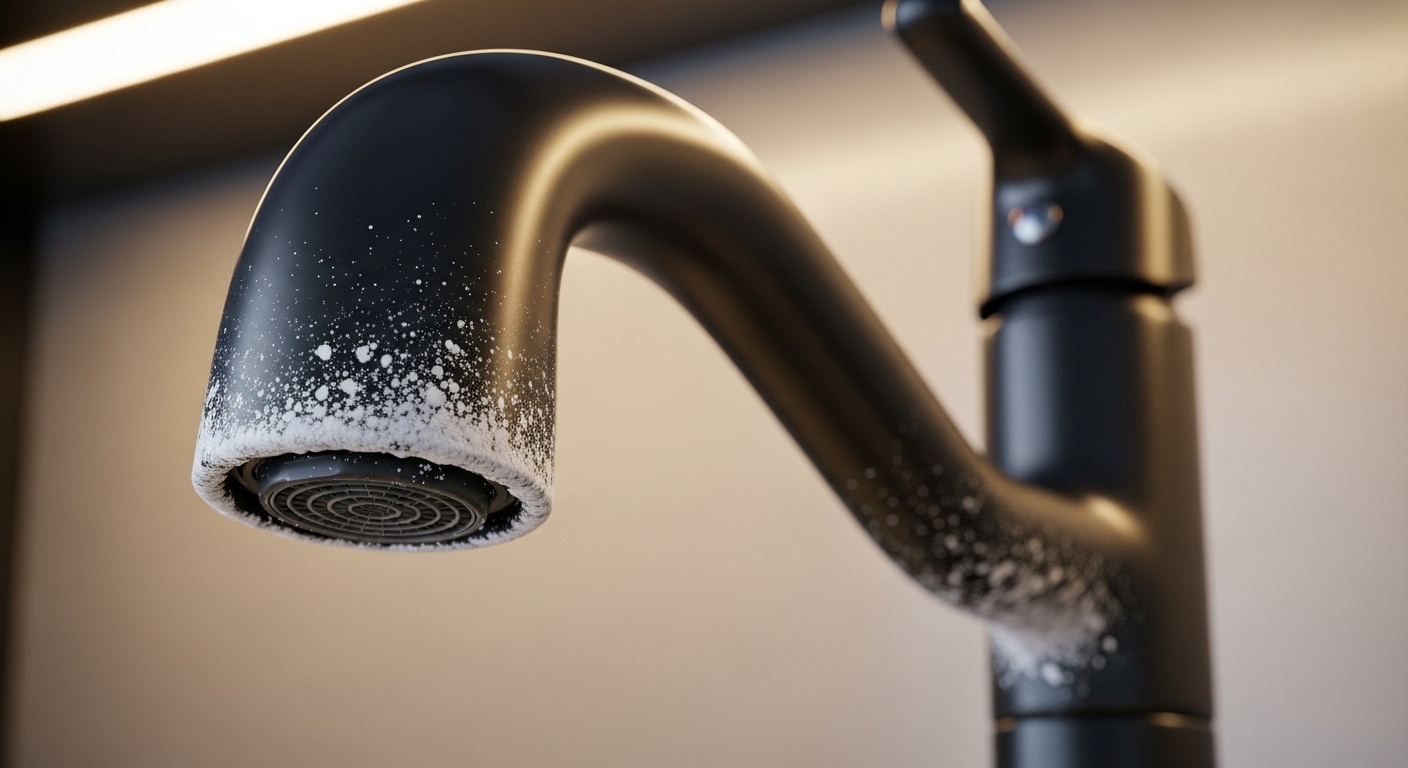
If you’re dealing with hard water stains on a black faucet, you already know the frustration: those chalky white, cloudy, or rust-tinged marks show up far more obviously on a dark finish than they ever would on chrome. The good news is that almost all of it is surface mineral buildup — calcium and magnesium left behind when hard water evaporates — and it comes off with the right gentle approach. The bad news is that the wrong cleaner will damage the finish faster than the water ever could. This guide walks you through exactly how to clean it, what to never touch it with, and how to stop the stains from coming back.
Black faucets — whether matte black, satin black, or oil-rubbed bronze — are some of the most popular finishes we sell, and also the ones customers ask about most when it comes to water spots. So let’s get specific about your finish, your water, and what actually works.
Why do hard water stains show up so badly on a black faucet?
Hard water stains look worse on a black faucet because of pure contrast — the white mineral deposits sit on a dark surface, so every spot is visible, whereas the same deposits hide on a light chrome or stainless finish. The stains themselves are no worse; they’re just impossible to ignore.
Here’s what’s actually happening. Hard water carries dissolved calcium, magnesium, and sometimes iron. When a droplet sits on your faucet and evaporates, the water leaves but the minerals stay, fusing into a thin crust. On a faucet you use 30–40 times a day, those deposits stack up fast, especially around the base, the spout tip, and the handle where water pools. If your home measures above 7 grains per gallon (about 120 mg/L), you’re in “hard water” territory and you’ll see buildup within days of cleaning.
There’s a second layer to the problem on black faucets specifically: many are finished with a PVD coating or an oil-rubbed bronze “living finish.” These look stunning but they’re chemically sensitive. So the challenge isn’t just removing the stain — it’s removing it without etching, dulling, or stripping the color underneath.
What’s the safest way to remove hard water stains from a black faucet?
The safest method is a diluted white vinegar soak: mix equal parts white vinegar and warm water, soak a cloth in it, drape it over the stained areas for 10–15 minutes, then wipe gently with a microfiber cloth and rinse thoroughly with clean water. Vinegar is a mild acid that dissolves calcium without the harshness of commercial descalers.
Follow these steps in order:
- Wipe the faucet dry first and remove loose grime with a damp cloth so the vinegar works on the minerals, not the daily film.
- Mix a 1:1 solution of plain distilled white vinegar and warm water in a bowl. Do not use undiluted vinegar on matte black or bronze — full-strength acid is too aggressive for sensitive coatings.
- Soak a microfiber or cotton cloth and wrap it around the spout and base. For the aerator tip, soak it directly. Let it sit 10–15 minutes (no longer).
- Wipe in the direction of the finish with light pressure. Stubborn spots may need a soft old toothbrush — bristles only, never metal or scouring pads.
- Rinse completely with clean water to remove all acid residue, then dry immediately with a fresh microfiber cloth. Drying is the step most people skip, and it’s the most important one.
For light, everyday spotting you often don’t even need vinegar — a damp microfiber cloth and a thorough dry-off does the job. Save the vinegar soak for visible, crusted buildup. This same gentle-first philosophy is exactly what we recommend in our guide on how to protect faucet finishes and keep them looking new.
Can I use baking soda or lemon on a black faucet?
Use baking soda only as a very mild paste and only on truly stubborn spots — and skip lemon entirely on dark finishes. Baking soda is a fine abrasive, so a thin paste (baking soda plus a few drops of water) buffed gently with a soft cloth can lift a tough deposit. But rub lightly; aggressive scrubbing will burnish matte finishes into shiny patches that never recover.
Lemon juice is more acidic and inconsistent than white vinegar, and citric acid can react with oil-rubbed bronze’s living finish, pulling color unevenly. White vinegar, properly diluted, is the predictable, finish-safe choice. When in doubt, less acid and more patience.
What should you NEVER use on a matte black or bronze faucet?
Never use bleach, ammonia, abrasive scouring pads, “soft scrub” creams, or commercial lime/rust removers like CLR on a matte black or oil-rubbed bronze faucet. These strip protective coatings and leave permanent dull spots, discoloration, or bare metal showing through. Once the coating is gone, no cleaning brings it back — you’re looking at a replacement.
Here’s a quick reference for what’s safe and what isn’t:
| Cleaner / Tool | Safe on black faucets? | Why |
|---|---|---|
| Diluted white vinegar (1:1) | ✅ Yes | Mild acid dissolves minerals without etching the finish |
| Dish soap + warm water | ✅ Yes | Gentle daily cleaning, safe on all finishes |
| Baking soda paste (light use) | ⚠️ With caution | Mild abrasive — only on tough spots, buff gently |
| CLR / Lime-Away / rust removers | ❌ No | Strong acids strip PVD and bronze coatings |
| Bleach or ammonia | ❌ No | Discolors and corrodes the finish |
| Magic eraser / steel wool / scouring pad | ❌ No | Abrasion burnishes matte finishes and scratches coatings |
One nuance worth understanding: matte black and oil-rubbed bronze behave differently. Matte black is usually a sealed PVD or powder-style coating that you want to keep intact. Oil-rubbed bronze is often a “living finish” designed to age and reveal warmer copper tones over time — which means harsh cleaners don’t just remove minerals, they accelerate uneven aging. If you want a deeper look at how these dark finishes are built and why they react the way they do, our breakdown of the matte black finish in 2026 explains the coating technology in plain language.
How do I get rid of rust-colored or orange stains, not just white ones?
Orange or rust-colored stains mean your water carries dissolved iron, and they need a slightly different approach: a paste of baking soda and a little water, or a cream of tartar paste, applied gently and left for a few minutes before wiping. Vinegar alone often won’t fully clear iron staining, but pairing a short vinegar soak with a gentle baking-soda buff usually does it.
If you’re seeing rust stains return constantly, the faucet finish isn’t failing — your water supply has elevated iron. A few things to check:
- Test your water. Inexpensive hard-water test strips tell you grains per gallon and whether iron is present.
- Inspect the aerator. Unscrew the aerator at the spout tip and soak it separately in vinegar — iron and calcium collect there first and restrict flow.
- Consider a filter or softener. A whole-home softener or even a point-of-use filter dramatically slows both white and orange staining.
If you notice your flow has dropped along with the staining, mineral buildup in the aerator or cartridge may be the cause, and our guide on how to fix a low flow kitchen faucet without calling a plumber walks through clearing those deposits step by step.
How do I stop hard water stains from coming back on a black faucet?
The single most effective prevention is to dry your faucet after use — a quick wipe with a microfiber cloth after the last dishwashing or face-washing of the day removes the water before minerals can form. No standing water means no stains. Everything else is secondary to that one habit.
Beyond drying, build a simple routine:
- Weekly wipe-down with dish soap and water, then dry.
- Monthly vinegar soak on the aerator and base to clear early buildup before it crusts.
- Optional wax barrier. A thin coat of car wax or a dedicated fixture wax once or twice a year makes water bead up and roll off, and it’s safe on most sealed black finishes (spot-test first on oil-rubbed bronze).
- Address the water source. If you’re cleaning every few days, a softener pays for itself in saved effort and protects every fixture in the house.
Prevention is genuinely the whole game with dark finishes. A faucet that gets dried daily can go years looking showroom-new, while an identical faucet left to air-dry in hard water looks tired within months. The finish quality matters too — better PVD and coating processes resist staining and cleaning wear far longer, which is exactly what proper faucet finish durability testing is designed to measure.
Will hard water permanently damage my black faucet?
Hard water itself rarely causes permanent damage to a quality black faucet — the minerals sit on the surface and wipe off. Permanent damage almost always comes from the cleaning method, not the water: harsh acids and abrasive pads are what etch and strip the finish. If you stick to gentle cleaning and regular drying, the finish underneath stays intact for the life of the faucet.
When is it time to stop cleaning and just replace the faucet?
It’s time to replace the faucet when the dark finish has visibly worn through to bare metal, shows permanent dull or discolored patches, or the spots no longer respond to vinegar — that’s a sign the coating itself is gone, not that the minerals are stubborn. At that point, cleaning can’t restore color that’s no longer there.
A few honest signals it’s a finish failure, not a stain:
- Silvery or coppery metal showing through at high-touch spots like the handle.
- Cloudy or chalky areas that stay even after a thorough vinegar soak and dry.
- Flaking or peeling of the coating — common on cheap spray-coated faucets, rare on quality PVD.
If you do upgrade, it’s worth choosing a faucet with a genuine PVD or quality powder-coated black finish rather than a budget painted one, since the coating quality is what determines how it handles years of hard water and cleaning. And if you’re weighing finishes more broadly before you buy, comparing the major brands in our Moen vs Delta vs Kohler comparison is a useful starting point for understanding what you’re paying for.
FAQ
Can I use CLR or Lime-Away on a black faucet to remove hard water stains?
No. CLR, Lime-Away, and similar lime/rust removers are strong acids formulated for chrome and porcelain, and they strip the PVD or bronze coating on black faucets, leaving permanent dull or discolored patches. Stick to diluted white vinegar, which clears the same mineral deposits without harming the finish.
How often should I clean hard water stains off my black faucet?
Wipe and dry the faucet daily after use, do a soap-and-water cleaning weekly, and a diluted vinegar soak on the aerator and base monthly. With very hard water you may want the vinegar soak every two weeks. The daily dry-off is what prevents stains from forming in the first place.
Why does my black faucet look worse after I clean it?
If it looks duller or shinier in patches after cleaning, you likely used something abrasive — a magic eraser, scouring pad, or harsh cream — which burnished or stripped the matte finish. Switch to a microfiber cloth and diluted vinegar only, and avoid any scrubbing tool. Unfortunately, finish damage from abrasives can’t be reversed.
Does vinegar damage matte black or oil-rubbed bronze finishes?
Diluted white vinegar (1:1 with water) is safe for short contact times of 10–15 minutes on most black finishes. The risks come from using it undiluted, leaving it on too long, or letting acid residue dry on the surface. Always rinse thoroughly and dry afterward, and spot-test a hidden area on oil-rubbed bronze living finishes first.
How do I prevent hard water stains long-term without scrubbing constantly?
Address the water itself with a whole-home water softener or a point-of-use filter, and apply a thin protective wax to the faucet once or twice a year so water beads off. Combined with a quick daily dry-off, this reduces visible staining to almost nothing and means you rarely need to do a deep clean.
Author note: This guide was written by the iviga product team, drawing on hands-on testing of matte black, satin black, and oil-rubbed bronze faucets across a range of water-hardness conditions. At ivigafaucet, we manufacture and finish faucets to recognized industry standards, and we back our finishes with a warranty against defects — so our advice here is built on how these coatings actually perform in real homes, not on guesswork. When a cleaning method could risk your finish, we tell you, because protecting the faucet you already own matters more than any sale.