 iVIGA Faucet Online Shop

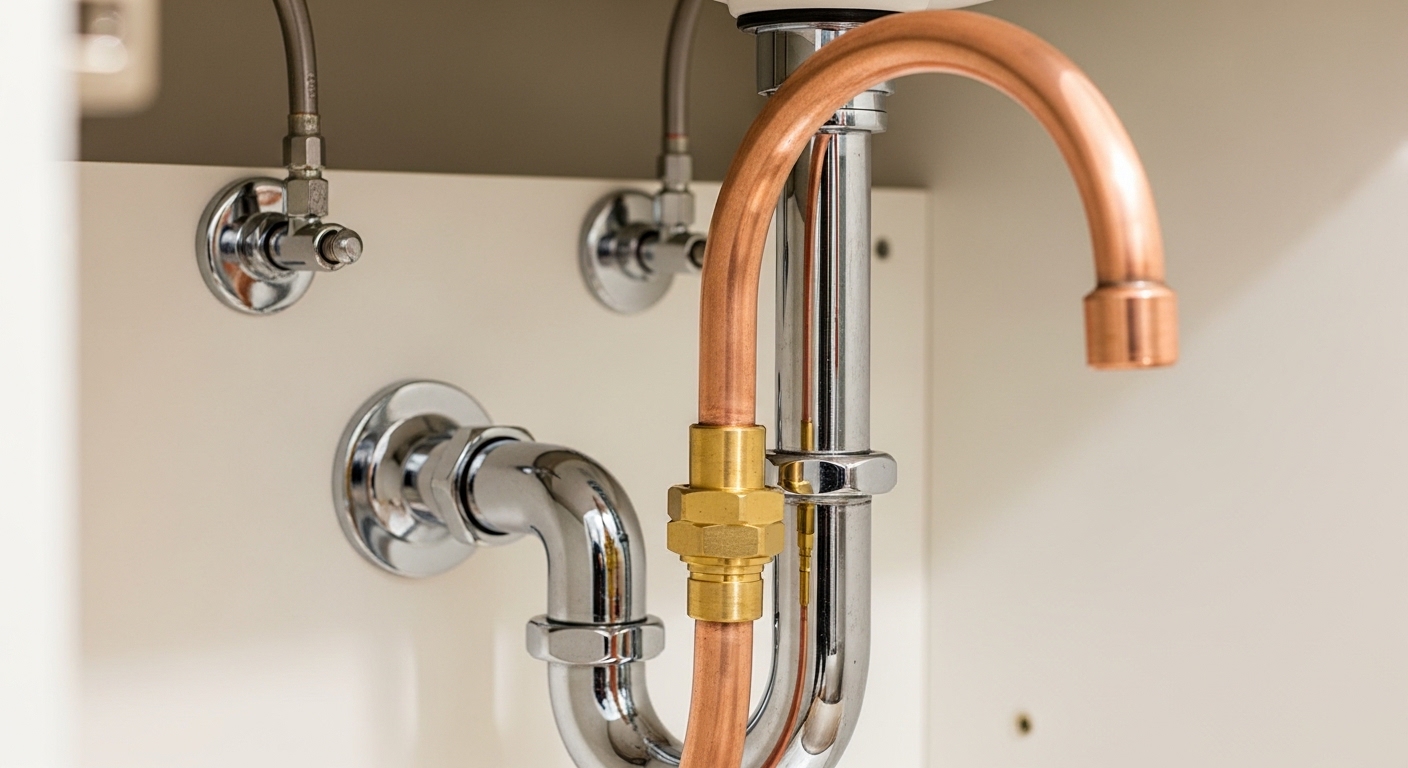
If you’ve been pricing out a faucet install and keep seeing the term “copper faucet connector” pop up next to cheaper braided hoses, you’re asking the right question. A copper faucet connector is the supply line that carries pressurized water from the angle stop (your under-sink shut-off valve) up to the inlet on your kitchen or bathroom faucet. Unlike a flexible braided line, it’s made of solid drawn copper — sometimes chrome-plated — and it’s prized for durability, temperature tolerance, and a clean, professional look under the sink. Below, we’ll walk through exactly when copper is the smart buy, how to size it, what it costs, and how it stacks up against the alternatives.
What exactly is a copper faucet connector, and how is it different from a braided hose?
A copper faucet connector is a solid copper tube — often with a decorative chrome or polished finish — that connects your water shut-off valve to your faucet. The key difference from a braided stainless steel hose is rigidity: copper holds its shape and is bent (or comes pre-bent) to route water, while a braided line flexes freely. That rigidity is both its strength and its quirk.
Copper has been the plumbing industry’s gold standard for over a century for good reason. It doesn’t off-gas, it tolerates extreme heat, it resists bacterial growth, and it won’t degrade from UV or chlorine the way a rubber-cored braided hose eventually can. The trade-off is that copper requires more careful fitting — you can’t just yank it into place at an angle the way you can with a flexible line.
There are two common formats you’ll run into:
- Rigid copper riser: A straight, smooth copper tube (typically 3/8″ OD) you cut to length and bend gently by hand or with a tubing bender. Cleanest look, longest life, most fiddly to install.
- Corrugated/semi-rigid copper connector: A ribbed copper tube that flexes a bit so you can route it without a bending tool. A middle ground between rigid copper and braided convenience.
Should I use a copper faucet connector or a braided stainless steel one?
Use copper when you want the longest possible service life and the cleanest finished look, and you’re comfortable measuring and bending tube; use braided stainless when you want a fast, foolproof install in a tight cabinet. Both are good choices — this isn’t a “cheap vs. quality” decision so much as “rigid precision vs. flexible convenience.”
Copper wins on heat. A copper hot-water connector won’t soften or balloon under sustained 140–180°F water the way a low-grade rubber core can. It also has no internal rubber or EPDM liner to dry-rot, which is the most common failure point in budget braided hoses after 8–10 years. If you’re plumbing a utility setup or a high-use kitchen sink, that longevity matters — see our 2026 commercial buyer’s guide for utility faucets for where heavy-duty supply lines really earn their keep.
Braided stainless wins on speed and tight spaces. If your shut-off valve and faucet inlet are slightly misaligned, a flexible line absorbs that offset instantly. Copper would need bending to match. For a renter doing a quick swap or anyone working in a cramped vanity, braided is genuinely the practical pick.
| Feature | Copper Faucet Connector | Braided Stainless Steel | Plastic/PEX Connector |
|---|---|---|---|
| Typical lifespan | 20+ years | 8–15 years | 5–10 years |
| Heat tolerance | Excellent (no liner to fail) | Good (depends on core) | Fair |
| Install difficulty | Moderate (cut/bend) | Easy | Easy |
| Handles valve/faucet misalignment | Poor (must bend) | Excellent | Good |
| Look under sink | Clean, professional | Functional | Basic |
| Typical price (each) | $6–$18 | $5–$12 | $3–$8 |
How do I know what size copper faucet connector to buy?
Match two ends: the valve side is almost always 3/8″ compression on residential angle stops, and the faucet side is usually a 3/8″ or 1/2″ inlet — check your faucet’s tailpiece before buying. Then pick a length 1–2 inches longer than your measured run so you have room to bend and trim.
Here’s the simple measuring process most people get wrong by overcomplicating it:
- Identify the valve outlet. Most U.S. under-sink angle stops have a 3/8″ compression outlet (the OD of the small tube it accepts). This is the single most common size.
- Identify the faucet inlet. Kitchen and bathroom faucets typically have either a 3/8″ compression inlet or a 1/2″ female threaded connection. Many modern faucets use a 3/8″ comp connection to match standard supply lines.
- Measure the distance from the valve outlet to the faucet inlet, following the path the tube will actually travel. Add 1–2 inches of slack.
- Confirm the connector type: compression-to-compression is most common, but you may need compression-to-female-thread depending on your faucet.
If you’re unsure whether you even need a different connector or just an adapter to bridge two thread types, our explainer on why a faucet adapter matters clears up the difference between an adapter and a supply line.
How do I install a copper faucet connector without leaks?
Shut off the water, dry-fit the copper line, bend it gently to align both ends dead-straight into their fittings, then tighten each compression nut about a quarter-turn past hand-tight — no thread tape on compression joints. The single biggest cause of leaks with copper is forcing a misaligned tube into a fitting, which cocks the ferrule and breaks the seal.
A reliable step-by-step:
- Turn off the angle stops and open the faucet to release pressure. Place a towel and a small bucket under the work area.
- Dry-fit first. Hold the copper connector between the valve and faucet inlet. If it doesn’t line up, bend it slowly with your hands (or a spring bender for tight radii) — never kink it.
- Seat the ferrule squarely. The compression ferrule (the brass ring) must sit flush. Slide the nut and ferrule onto the tube before inserting it into the valve outlet.
- Hand-tighten, then snug. Tighten the nut by hand, then use two wrenches — one to hold the valve, one to turn the nut — and go about a quarter to half turn past hand-tight. Over-tightening crushes the ferrule and causes leaks.
- Skip the tape on compression joints. Thread sealant tape belongs on threaded (NPT) connections, not on the metal-to-metal seal of a compression fitting. On a female-threaded faucet inlet, a few wraps of tape are fine.
- Turn the water back on slowly and inspect both ends. A bead of water means re-seat, don’t just crank harder.
If you do see a drip after everything’s tight, don’t panic — it’s usually a seating issue, not a defective part. We cover the exact diagnostic steps in why your faucet drips after replacement, which applies directly to supply-line connections.
Is a copper faucet connector worth the extra money for a bathroom or kitchen sink?
For a permanent install in a home you’ll keep for years, yes — the durability and heat resistance justify the few extra dollars. For a rental, a quick fix, or a tight cabinet with misaligned fittings, a braided line is the more sensible spend. The price gap is small (often $2–$8 per line), so the decision is really about install conditions and how long you want to forget about it.
Think about it in terms of failure cost, not purchase cost. A supply line that fails is one of the most common sources of catastrophic water damage in a home, because it’s pressurized 24/7. Copper’s longer, more predictable lifespan is cheap insurance under a finished cabinet. That said, a quality braided stainless line from a reputable maker is also perfectly reliable — the danger zone is the bargain-bin no-name hose with a thin rubber core.
One more consideration: water quality. Copper performs well across most municipal water, but in very acidic or aggressive water it can corrode faster. If you’re on well water or know your water is hard or acidic, factor that in — the same way you’d weigh it when choosing a whole faucet. Our regional guide to choosing faucets for your budget and water type walks through how water chemistry should steer your fixture choices.
What about lead safety and certification?
Always buy a connector marked lead-free and certified to a recognized drinking-water standard. In the U.S., look for compliance with NSF/ANSI 372 (lead content) and NSF/ANSI 61 (drinking water system components), plus conformance to the federal Safe Drinking Water Act’s “lead-free” definition (≤0.25% weighted average lead on wetted surfaces). Reputable copper and brass connectors use low-lead or no-lead alloys for exactly this reason. If you’ve ever worried about legacy fittings, our guide on removing lead from faucets safely is worth a read before you reuse any old hardware.
How long does a copper faucet connector last, and how do I make it last longer?
A quality copper connector commonly lasts 20 years or more — often outliving the faucet it serves. To get the full lifespan, avoid over-tightening, keep the under-sink area dry, and don’t reuse old compression ferrules when you swap a faucet. The connector itself rarely fails; the seal is what ages.
Maintenance is minimal but real:
- Inspect annually. A 30-second check under the sink for green corrosion (verdigris) or moisture catches problems early.
- Use a fresh ferrule and nut whenever you disconnect and reconnect — the old ones deform and won’t re-seal reliably.
- Don’t bend a connector repeatedly. Copper work-hardens; bending the same spot back and forth weakens it. Shape it once, correctly.
- Protect the finish if it’s exposed and visible — the same care principles in our guide on protecting faucet finishes apply to polished copper risers in open-base or pedestal setups.
A quick note on buying from ivigafaucet
At ivigafaucet, we spec our supply lines and connectors to the same standards we apply to our faucets: lead-free alloys, pressure-tested fittings, and clear size labeling so you don’t end up with a mismatched comp size at checkout. Every connector we list states its valve-end and faucet-end connection type up front, and our copper and brass components are certified to drinking-water standards with a manufacturer warranty against material defects. If you’re matching a connector to one of our faucets, the product page lists the exact inlet size so you can buy with confidence the first time.
FAQ
Are copper faucet connectors better than braided ones?
Not universally “better” — different. Copper lasts longer (20+ years), tolerates heat better, and has no rubber liner to fail, making it ideal for permanent installs. Braided stainless is easier to fit, handles misaligned valves and faucets, and is better for tight cabinets or quick swaps. For a forever home, copper edges ahead; for speed and flexibility, braided wins.
What size copper faucet connector do I need?
Most residential setups use a 3/8″ compression connection on the valve end. The faucet end is usually 3/8″ compression or 1/2″ female threaded — check your faucet’s tailpiece. Measure the run from valve to faucet, then add 1–2 inches of slack for bending and trimming.
Do I need plumber’s tape on a copper faucet connector?
No tape on compression fittings — they seal metal-to-metal via the brass ferrule, and tape can actually prevent a proper seal. Only use a few wraps of PTFE thread tape on threaded (NPT) connections, such as a female-threaded faucet inlet.
Can I bend a rigid copper supply line by hand?
Yes, gentle, wide bends can be done by hand. For tighter radii, use a spring tubing bender slipped over the tube to prevent kinking. Bend it once into its final shape — repeated bending of the same spot work-hardens and weakens the copper.
Why is my new copper faucet connector leaking?
Nearly always a seating problem, not a defect. The most common causes are a misaligned tube cocking the ferrule, an over-tightened nut crushing the ferrule, or a reused old ferrule that no longer seals. Loosen, re-seat the tube dead-straight, fit a fresh ferrule, and snug to a quarter-turn past hand-tight.
Is copper safe for drinking water?
Yes, when it’s a lead-free, certified product. Look for NSF/ANSI 61 and NSF/ANSI 372 compliance and a “lead-free” marking. Copper itself is widely used for potable water; the concern is only legacy fittings with leaded brass, which modern certified connectors avoid.
Author note: This guide was written by the ivigafaucet product content team, drawing on hands-on faucet and supply-line installations and our in-house fitting and pressure-testing process. ivigafaucet has supplied faucets and fixtures to homeowners and trade installers since our founding, and we test connectors to recognized drinking-water and durability standards before listing them.