 iVIGA Faucet Online Shop

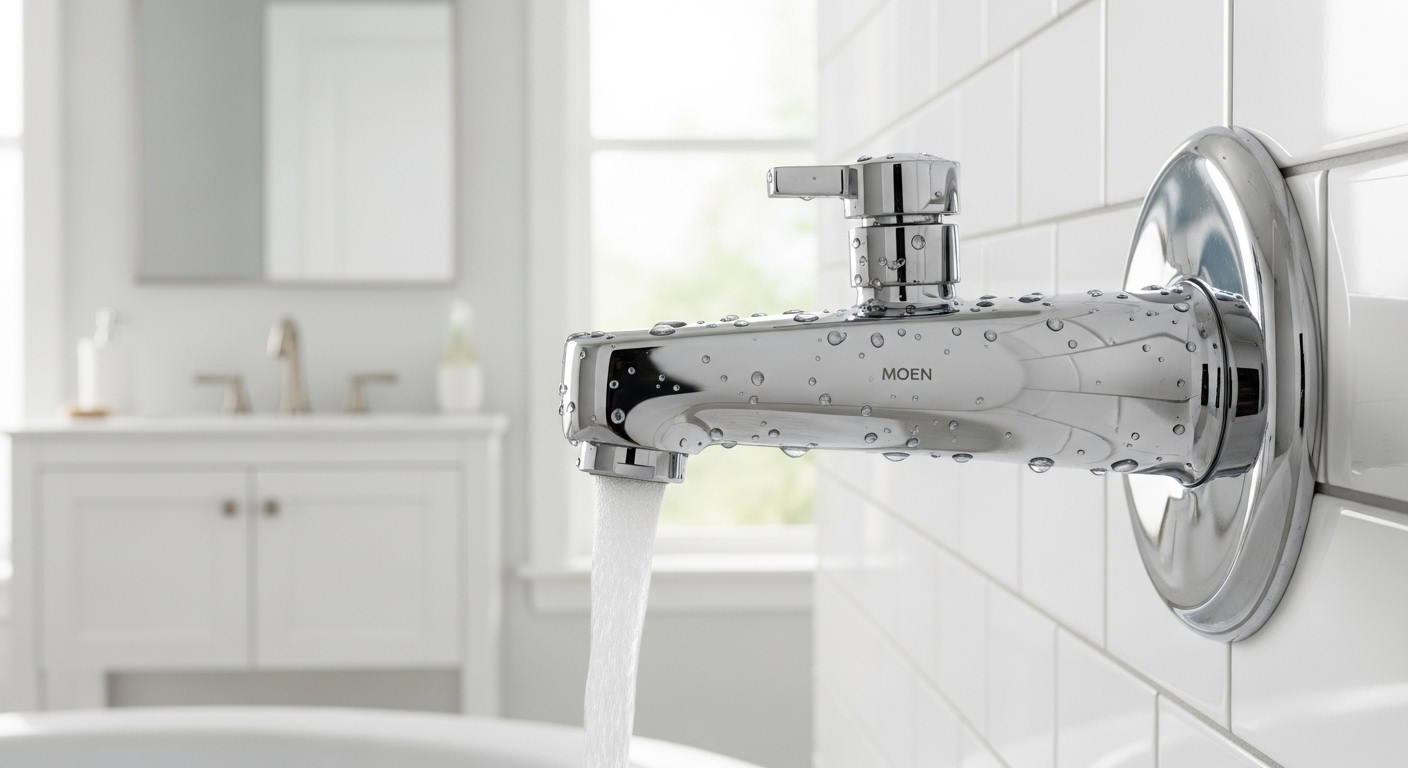
Buying the wrong tub spout Moen sells is the single most common mistake people make on this otherwise easy upgrade — and it almost always comes down to the connection. A Moen tub spout is the metal spout that delivers water into your bathtub, and many models include a built-in diverter (the little pull-up knob on top) that redirects water to your shower head. Get the attachment style right and installation takes about ten minutes with no plumber. Get it wrong and you’ll be standing in the hardware aisle holding a spout that physically can’t connect to your wall. This guide walks you through exactly how to identify what you have, what Moen offers, and how to install it without leaks.
How do I know if I need a slip-fit or threaded Moen tub spout?
Pull off your old spout and look at the pipe stub: a smooth, bare copper pipe means slip-fit; visible threads (grooves cut into the pipe) mean threaded. This is the only measurement that truly matters before you buy.
To remove your existing spout, look underneath it near the wall. If you see a small hex (Allen) set screw, loosen it and the spout slides straight off — that’s a slip-fit connection. If there’s no set screw, the spout simply unthreads counterclockwise like a giant bolt — that’s threaded. From there, measure two things:
- Pipe diameter: Most residential tubs use a ½” pipe. Slip-fit spouts ride over a ½” copper stub; threaded spouts thread onto a ½” IPS/NPT nipple.
- Spout length / reach: Measure from the wall to the center of the water outlet. Moen tub spouts commonly run between 4″ and 9″. Buying the same length keeps the water stream landing in the same spot in your tub.
If you’re replacing the whole handle assembly at the same time, our walkthrough on how to replace a bath faucet handle pairs perfectly with a spout swap — together they refresh the entire tub valve trim in one afternoon.
What’s the difference between a Moen diverter tub spout and a plain one?
A diverter tub spout has a pull-up knob that forces water up to the shower head; a plain (non-diverter) spout just fills the tub. You only need a diverter spout if your tub and shower share one valve and you don’t have a separate diverter on the wall valve itself.
Here’s the quick logic: if pulling a knob on top of your current spout is what turns the shower on, you need a diverter replacement. If you switch between tub and shower using a lever or dial on the valve trim (the round plate where the handle is), then your diverting happens at the valve and you want a non-diverter spout. Putting a diverter spout on a system that already diverts at the valve usually still works, but you’ll have a knob that does nothing — confusing for guests and one more part that can fail.
Which Moen tub spout connection types compare best for my setup?
Slip-fit is the most forgiving for DIY and the most common in newer homes, while threaded is rock-solid but less tolerant of pipe-length error. Here’s how the main Moen options stack up.
| Connection type | How it attaches | Best for | Watch out for |
|---|---|---|---|
| Slip-fit (set screw) | Slides over smooth ½” copper, locked by a hex set screw underneath | Newer homes, easy DIY swaps, hiding pipe-length variation | Set screw must seat on the pipe; a missing O-ring/gasket causes leaks behind the wall |
| Threaded (IPS/NPT) | Threads onto a ½” galvanized or brass nipple | Older homes, maximum holding strength | Spout must bottom out flush to the wall — wrong nipple length leaves a gap or won’t seal |
| Universal / adapter | Includes adapters to fit multiple stub types | People unsure of their connection | More parts to align; still requires correct length |
If you’re weighing Moen against other big names before you commit to a finish family for your whole bathroom, our breakdown of Moen vs Delta vs Kohler explains where each brand’s trim genuinely differs in quality and parts availability.
How do I install a Moen tub spout without leaks? (step by step)
You can install most Moen tub spouts in under 15 minutes with one tool and some plumber’s tape — the leak-proofing is all about sealing the connection and snugging the spout flush to the wall.
- Remove the old spout. For slip-fit, loosen the hex set screw underneath and pull the spout straight off. For threaded, turn the spout counterclockwise (use a cloth-wrapped pipe wrench if it’s stuck).
- Inspect and clean the stub. Wipe the copper pipe or threads clean. Check that the pipe sticks out the right distance — too short and the spout won’t reach the wall; too long and it won’t seat.
- Seal the connection. For threaded nipples, wrap the threads 4–6 times clockwise with PTFE plumber’s tape. For slip-fit, make sure the internal O-ring or gasket is present and lightly lubricated.
- Mount the spout. Slide (slip-fit) or thread (threaded) the spout on until it’s flush against the wall with the outlet pointing straight down. Don’t overtighten threaded spouts — stop when it’s snug and aligned.
- Lock it. Tighten the set screw for slip-fit models. Then run water, pull the diverter, and check underneath and behind for any drips.
A common rookie error is leaving a gap between spout and wall, which lets water sneak behind the tile. Caulk the top and sides of the spout base (leaving the bottom open to drain) once you confirm there are no leaks. If you’re new to pulling fixtures off, the same careful approach in our guide on removing your old faucet applies to spouts too.
Why is my new Moen tub spout leaking or the diverter not working?
If water drips from a closed spout or the shower is weak, the culprit is almost always the diverter seal or a connection gap — not a defective spout. These are fixable in minutes once you know where to look.
Run through the likely causes in order:
- Water dribbles from the spout while showering: a small amount is normal because diverters aren’t perfect seals; a heavy stream means the diverter washer is worn or the spout is the wrong type for your valve.
- Shower pressure is weak after the swap: the diverter isn’t fully lifting or the spout’s internal passage is partly blocked by debris loosened during install.
- Leak where the spout meets the wall: missing plumber’s tape (threaded) or a pinched/missing O-ring (slip-fit). Re-seat and re-tape.
- Leak from the set screw area: the set screw didn’t bite the pipe, so the spout shifts. Reposition and re-tighten.
Because the diverter is the part doing the most mechanical work, it’s also the part that wears first. The good news: on most Moen tub spouts the entire spout is the replaceable unit, so a worn diverter just means a fresh spout rather than fishing for tiny internal parts.
What finish should I pick, and will it match my existing Moen trim?
Pick the finish that matches your tub’s handle and shower head — Moen’s finishes are designed to coordinate across their lines, so a chrome spout pairs with chrome trim, brushed nickel with brushed nickel, and so on. Mixing finishes looks intentional only when the rest of the room repeats both metals.
Moen’s most popular tub spout finishes are Chrome, Brushed Nickel, Matte Black, and Oil Rubbed Bronze (Moen calls some of these “Spot Resist” for fingerprint resistance). A few quick pointers:
- Chrome: brightest, cheapest, easiest to find replacements, hides hard water spots poorly.
- Brushed Nickel: warm-neutral, hides water spots and fingerprints best — a safe long-term choice. If you’re wondering whether it still looks current, see our take on brushed nickel in 2026.
- Matte Black: bold and modern, but shows water minerals and dust; read up on matte black finishes in 2026 before committing a whole bathroom to it.
- Oil Rubbed Bronze: traditional, warm, deepens over time — pairs naturally with a matching oil rubbed bronze shower faucet set.
Whatever you choose, protecting the finish from harsh cleaners extends its life dramatically — abrasive pads and acidic descalers are what dull a spout’s coating fastest.
How long should a Moen tub spout last, and is it covered by warranty?
A quality brass-bodied tub spout should last 10–15 years or more, and Moen backs most of its residential tub/shower trim with a limited lifetime warranty against leaks and finish defects for the original homeowner. That warranty is one of the strongest reasons buyers stick with the brand.
Longevity comes down to two things: material and water. A solid brass spout outlasts a thin zinc or plastic one, and hard water shortens the life of any diverter by building mineral scale around the moving washer. If you have hard water, periodically running a vinegar-soaked cloth over the outlet (never inside an aerator-free diverter for long) and wiping the spout dry keeps both the mechanism and the finish healthy. Always confirm current warranty terms and what proof of purchase you’ll need directly with the manufacturer, since coverage differs between consumer and commercial use.
FAQ
Are Moen tub spouts universal, or only for Moen valves?
The spout itself is largely universal because it connects to the pipe stub, not to a brand-specific valve — a Moen slip-fit spout fits any ½” copper stub, and a threaded one fits any ½” NPT nipple. The exception is the diverter style matching your system; the valve underneath can be any brand as long as the connection type and length match.
How do I measure for the right Moen tub spout length?
Measure from the finished wall surface to the center of the water outlet on your current spout, then buy the same length. For slip-fit models, also note how far the bare copper pipe protrudes from the wall, since the spout must cover it and still sit flush.
Can I replace just the tub spout without touching the valve or handles?
Yes — the spout is an independent component, so you can swap it on its own in about ten minutes. You don’t even need to shut off the main water supply for a spout-only swap, though it’s fine to do so for peace of mind. Just match the connection type and finish to what you already have.
Why does water still come out of the spout when the shower is on?
A light trickle from a diverter spout while showering is normal because the diverter is a gravity-and-pressure seal, not a valve. A heavy, steady stream means the diverter washer is worn or you’ve installed a diverter spout on a system that already diverts at the valve — in that case switch to a non-diverter spout.
Do I need plumber’s tape on a Moen slip-fit tub spout?
No — slip-fit spouts seal with an internal O-ring or gasket and lock with a set screw, so plumber’s tape isn’t used on the smooth copper pipe. Save the PTFE tape for threaded spouts, where you wrap the nipple threads to prevent leaks.
What tool do I need to remove a Moen tub spout?
For slip-fit, a small hex (Allen) wrench to loosen the set screw underneath is all you need. For threaded spouts, you can usually turn them off by hand or with a cloth-wrapped pipe wrench or a screwdriver inserted into the spout outlet for leverage — wrap a rag to protect the finish.
About the author: This guide was written by the iviga fixtures team, drawing on hands-on installation and finish-testing of hundreds of tub and shower fixtures. At ivigafaucet.com, we manufacture and field-test faucets and bathroom fixtures to real-world standards — including finish-durability and leak testing aligned with common North American plumbing specs — so our buying advice reflects what actually holds up over years of daily use, not just spec sheets. Always verify model-specific dimensions and current warranty terms with the manufacturer before purchasing.