 iVIGA Faucet Online Shop

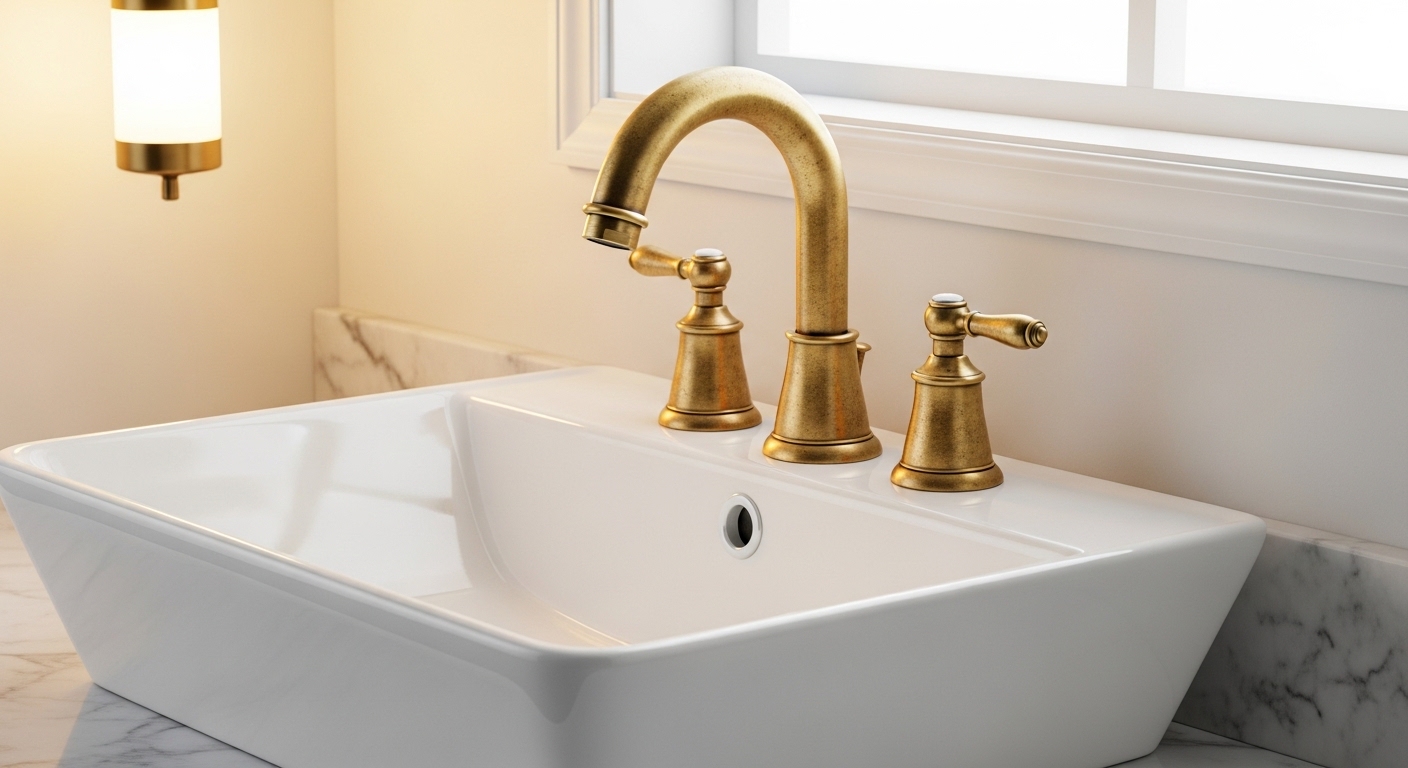
A single hole faucet antique brass setup is simply a one-handle faucet that mounts through a single drilled hole in your sink or countertop, finished in a warm, aged-gold tone that looks like real weathered brass. It’s one of the most-asked-about combinations in bathroom remodels right now because it solves two problems at once: it works on the compact single-hole sinks that dominate modern vanities, and it brings warmth back to a room that’s been dominated by chrome and matte black for a decade. Below, we’ll answer the real questions people actually ask before buying one — installation, finish durability, sizing, cost, and how antique brass compares to its look-alikes.
What exactly is a single hole faucet, and how is it different from a widespread?
A single hole faucet is a faucet where the spout and the handle (or handles) all come up through one hole in the deck. A widespread or centerset faucet, by contrast, needs two or three holes — typically spaced 4 inches (centerset) or 8 inches apart (widespread). If your sink or vanity top has just one pre-drilled hole, a single hole faucet is what you need, full stop.
That single-hole design is why these faucets feel so clean and uncluttered. Everything — hot/cold mixing, water flow — is controlled by one lever. Most single hole faucets also ship with an optional deck plate (an “escutcheon”) that lets you cover the extra holes if you’re replacing an old 3-hole faucet on a sink with 8-inch spacing. So even if you currently have a widespread, you can usually switch to a single hole faucet without buying a new sink.
- Single hole: one hole, one handle, most compact — ideal for small vanities and vessel sinks.
- Centerset: three holes on a 4-inch base, common in builder-grade bathrooms.
- Widespread: three separate pieces on 8-inch spacing — a more traditional, spread-out look.
Why pick antique brass over chrome, brushed nickel, or matte black?
Choose antique brass when you want warmth and character rather than a cold, sterile look. Antique brass has a deep, slightly muted golden-brown tone with darker recesses, so it reads as “vintage” and “hand-finished” instead of shiny and new. That warmth is exactly why it pairs so well with farmhouse, transitional, mid-century, and eclectic bathrooms.
There’s also a practical reason designers keep recommending it: antique brass hides water spots, toothpaste splatter, and fingerprints far better than polished chrome or glossy black. The aged, low-luster surface camouflages exactly the kind of daily mess that makes a chrome faucet look dirty an hour after you clean it. If you’ve ever fought hard water marks, you’ll appreciate this — and if you do end up with buildup, our guide on how to remove hard water stains without ruining the finish applies to brass finishes too.
If you’re still weighing finishes against current trends, it’s worth reading whether brushed nickel is out of style in 2026 and how the matte black finish is being redefined — both make a useful contrast with where warm metals like antique brass are heading.
| Finish | Look | Hides spots/fingerprints? | Best for | Maintenance |
|---|---|---|---|---|
| Antique brass | Warm aged gold, vintage | Excellent | Farmhouse, transitional, eclectic | Low |
| Polished chrome | Bright, mirror-like | Poor | Modern, budget builds | High (shows everything) |
| Brushed nickel | Soft satin silver | Good | Neutral, all-rounder | Low–medium |
| Matte black | Flat, bold, contemporary | Medium (shows limescale) | Modern, high-contrast | Medium |
| Oil-rubbed bronze | Dark brown-black, rustic | Excellent | Traditional, rustic | Low |
Antique brass and oil-rubbed bronze are cousins — both warm, both forgiving — but antique brass leans gold while oil-rubbed bronze leans nearly black. If you love the warm-metal direction but want it darker and for the shower, compare it with our oil-rubbed bronze shower faucet set buyer’s guide to coordinate finishes across the room.
Is antique brass the same as “real brass,” and will the finish wear off?
Not necessarily — and this is the single most important thing to check before you buy. “Antique brass” describes a color and finish, not always the underlying metal. A quality single hole faucet in antique brass uses a solid brass body underneath, then achieves the aged look one of two ways:
- Living finish (uncoated): real brass that’s been chemically aged. It will continue to patina naturally over years, getting slightly darker and more characterful. This is the most authentic, but it changes over time by design.
- PVD-coated antique brass: a physical vapor deposition coating bonded to the surface. PVD is extremely hard, won’t tarnish, and resists scratching and corrosion — it’s the most durable option and the one we recommend for a faucet that should look identical in ten years.
Avoid faucets where antique brass is just a thin electroplated or painted layer over zinc alloy (sometimes labeled “zinc” or with no body material stated). Those are the ones that chip and flake. The way the industry verifies durability is with standardized abrasion, salt-spray, and corrosion testing — if you’re curious how that’s done, our deep-dive on how to test faucet finish durability walks through the exact methods reputable manufacturers use. A faucet that meets ASTM B117 salt-spray standards and carries a finish warranty is doing more than marketing talk.
How hard is it to install a single hole antique brass faucet myself?
For most people it’s a 30-to-45-minute DIY job with basic tools — no plumber required. Because everything mounts through one hole, single hole faucets are the easiest type to install. Here’s the short version of what’s involved:
- Turn off the hot and cold shut-off valves under the sink and open the faucet to release pressure.
- If you’re replacing an old faucet, disconnect the supply lines and remove it. (Our guide on how to remove your old faucet without calling a plumber covers the stuck-nut situations.)
- Drop the new faucet’s pre-attached supply lines and threaded shank down through the single hole.
- From underneath, slide on the mounting bracket and tighten the nut so the faucet sits flush and square.
- Connect the supply lines to your shut-off valves — hand-tighten plus a quarter turn with a wrench.
- Turn the water back on slowly and check every connection for drips.
A couple of pro tips specific to antique brass: lay a soft cloth in the sink so you don’t scratch the finish while you work, and don’t over-tighten the supply connections, which can crack fittings and cause the slow leaks that show up a day later. If you do get a drip after install, it’s almost always a connection issue rather than a faulty faucet — see why your faucet drips after replacement and how to fix it.
What size and specs should I check before buying?
Match the faucet to your sink and your water, not just the look. Before you click buy, confirm these five specs:
- Hole diameter: standard single faucet holes are 1.35″–1.5″ (about 35mm). Most single hole faucets fit this; vessel-sink versions sit taller.
- Spout height and reach: for a vessel sink you need a tall spout (often 10″+); for a standard drop-in sink, a 5″–7″ spout height is typical. Too tall over a shallow basin means splashing.
- Cartridge type: a ceramic disc cartridge is the gold standard — it’s drip-resistant and lasts for hundreds of thousands of cycles. Avoid cheap rubber-washer designs.
- Flow rate: most modern bathroom faucets are capped at 1.2 GPM in the US (and 1.5 GPM max under EPA WaterSense). Lower flow saves water without feeling weak when the aerator is well designed.
- Connections: most include 3/8″ compression flexible supply lines. Check that they reach your shut-off valves.
For hard-water homes, the ceramic cartridge and a removable aerator matter even more, because minerals are what clog and seize faucets over time. The good news: antique brass’s forgiving surface means the cosmetic side of hard water is far less of a daily battle than it is with chrome.
How much should a single hole antique brass faucet cost in 2026?
Expect to pay $80–$250 for a good one, with most quality options landing around $120–$180. Here’s how the tiers break down so you know what you’re actually paying for:
| Price range | What you typically get | Watch out for |
|---|---|---|
| Under $60 | Zinc-alloy body, plated finish, rubber-washer valve | Finish flakes, drips within 1–2 years |
| $80–$180 | Solid brass body, ceramic disc cartridge, PVD or living finish | Confirm body material is stated as brass |
| $200–$250+ | Designer/heritage brands, hand-finished living brass, lifetime warranty | You’re partly paying for the name |
The sweet spot for most homeowners is the middle tier. A solid-brass single hole faucet in antique brass with a ceramic cartridge in that range will outlast two or three of the bargain faucets, which makes it cheaper over the life of the bathroom. If you want a broader sense of how brand pricing and value stack up across the market, our comparison of Moen vs Delta vs Kohler is a useful frame even though it focuses on kitchen lines — the build-quality logic carries straight over to bathroom fixtures.
How do I keep antique brass looking good for years?
Wipe it with a soft, damp cloth and mild soap — and skip anything abrasive. That’s genuinely most of the job. The biggest mistakes people make with antique brass are using acidic or abrasive cleaners (vinegar, bleach, scouring pads, or “polish” products) that strip a living finish or scratch a PVD coating. For everyday care:
- Dry the faucet after heavy use if you have very hard water, to prevent mineral buildup around the base and aerator.
- Use only mild dish soap and water; rinse and buff dry with a microfiber cloth.
- For a living finish, accept and even enjoy the patina — trying to “shine it up” defeats the look you paid for.
- For a PVD finish, never use metal polish; the coating doesn’t need it and polish can dull it.
Our full walkthrough on how to protect faucet finishes and keep them looking new goes deeper, but those four habits cover 95% of cases for warm metals like antique brass.
FAQ
Will an antique brass faucet match my other fixtures if they’re a different finish?
It can, and mixed metals are very much in style — but keep it intentional. Antique brass pairs beautifully with matte black hardware, oil-rubbed bronze, and even brushed nickel. The trick is to repeat the antique brass at least twice in the room (faucet plus cabinet pulls, or faucet plus light fixture) so it reads as a deliberate choice rather than a leftover.
Does antique brass tarnish or turn green?
A PVD-coated antique brass faucet will not tarnish or turn green — the coating seals the metal. A living (uncoated) finish will continue to age and may develop deeper tones over time, which is the intended effect; it won’t turn the bright green of corroded raw copper as long as it’s quality brass and you wipe it dry occasionally.
Can I put a single hole faucet on a sink that has three holes?
Yes. Most single hole faucets include a deck plate (escutcheon) that covers the two extra holes on a standard 4-inch or 8-inch sink. Just confirm the included deck plate matches your hole spacing before buying, and that it’s available in antique brass to match the faucet.
Is a single hole faucet good for a small bathroom?
It’s the best choice for a small bathroom. The compact, one-handle footprint takes up the least deck space, leaves more room around the sink, and is easier to clean around than a spread-out widespread faucet. The warmth of antique brass also adds character to a small space without overwhelming it.
What’s the difference between antique brass and brushed gold or champagne bronze?
Antique brass is warmer, browner, and more aged-looking, with darker recesses for a vintage feel. Brushed gold and champagne bronze are lighter, cleaner, and more contemporary — closer to a soft satin gold without the “weathered” character. If you want modern glam, go champagne bronze; if you want heritage warmth, go antique brass.
Do single hole antique brass faucets come with a warranty?
Reputable ones do — typically a limited lifetime warranty on function (the cartridge and body) and a separate multi-year finish warranty. Always check that the finish warranty specifically covers the antique brass coating against flaking and corrosion, since that’s the part most likely to fail on a low-quality faucet.
The bottom line
A single hole faucet in antique brass is a smart, low-maintenance way to add warmth and vintage character to a bathroom, especially on compact single-hole and vessel sinks. Buy one with a solid brass body, a ceramic disc cartridge, and either a PVD coating (for set-it-and-forget-it durability) or a living finish (for authentic, evolving patina), and you’ll have a fixture that looks intentional and lasts for years. In the $120–$180 range you get all of that without overpaying for a name.
Author note: This guide was written by the iVIGA fixtures content team, drawing on hands-on installation and finish-testing experience across hundreds of faucet models. iVIGA designs and supplies bathroom and kitchen fixtures with a focus on solid-brass construction and verified finish durability, and our recommendations follow recognized testing standards (including ASTM B117 salt-spray and abrasion testing) so the advice reflects how these products actually perform — not just how they look in a catalog. Always follow the manufacturer’s installation instructions and warranty terms for your specific model.