 iVIGA Faucet Online Shop

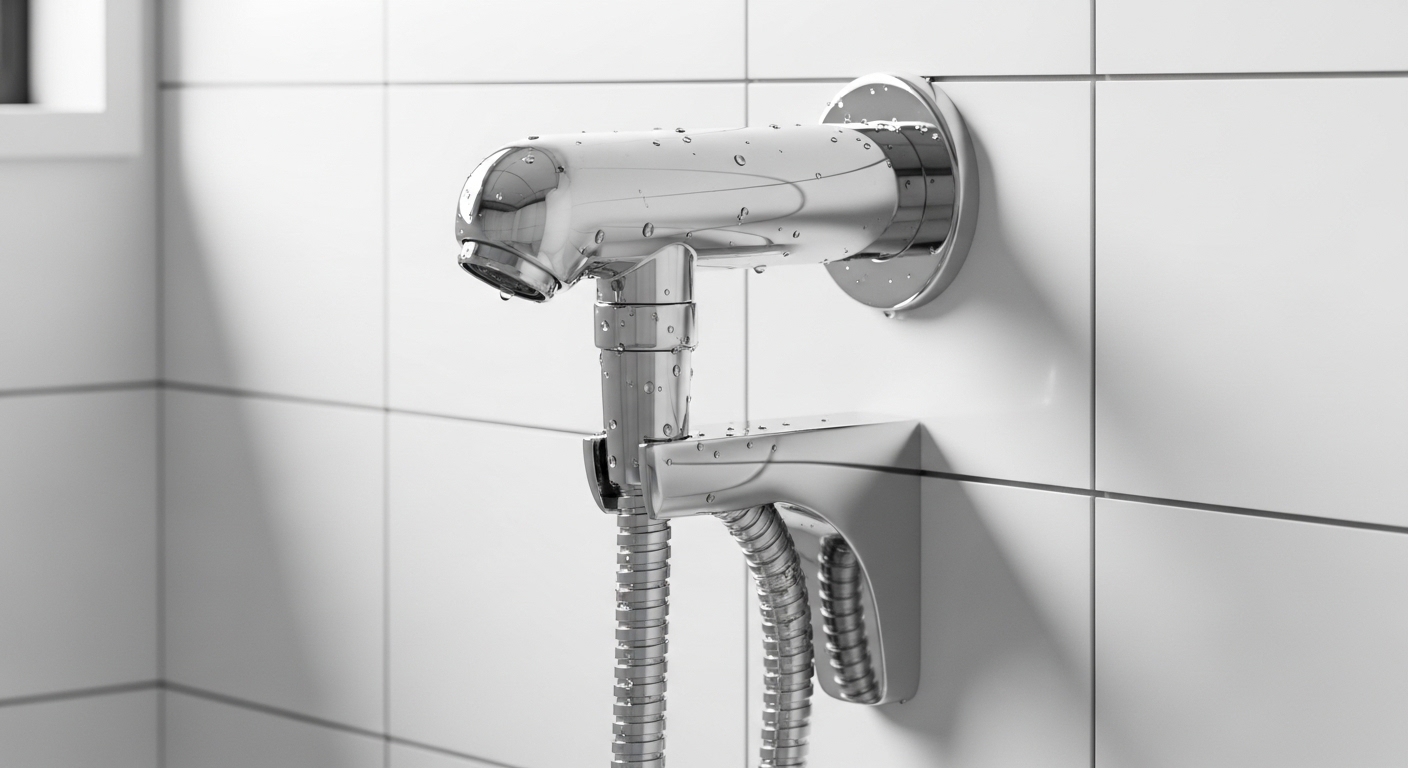
If you’ve ever tried to hook up a handheld sprayer and found the hose fighting you at every angle, a handheld shower head elbow is almost certainly the part you’re missing. It’s a small brass or stainless fitting — often shaped like an “S” or a 90-degree bend — that redirects water flow downward and gives the hose a clean, gravity-friendly path. People rarely shop for it on purpose; they discover they need one mid-install, standing in the bathroom with a leaking joint or a hose that won’t sit right. This guide answers the real questions buyers ask before they click “add to cart”: what it does, which type fits your setup, what a fair price looks like, and how to install it without flooding the floor.
At ivigafaucet, we manufacture and test shower fittings for both retail and trade customers, so the advice below comes from bench testing and warranty data, not guesswork. Let’s get you the right part the first time.
What does a handheld shower head elbow actually do?
It converts a fixed, outward-pointing water outlet into a downward, swiveling connection that a handheld hose can attach to comfortably. Without it, the hose either sticks straight out from the wall or kinks sharply, which strangles flow and stresses the rubber over time.
Think of your shower plumbing as a relay. Water travels up inside the wall, exits through a threaded stub called the shower arm (or a drop elbow behind the tile), and then needs to make a turn so it flows down into your hand rather than out into the room. The elbow is that turn. Most quality elbows include a ball-joint swivel so you can angle the connection 20-30 degrees in any direction, plus a flange or escutcheon that hides the wall penetration. On many handheld kits, the elbow doubles as the docking bracket — the wand clips into a cradle that’s part of the same fitting.
A good elbow does three things at once: it seals the threaded joint so it doesn’t drip, it lets the hose hang without kinking, and it holds the wand securely when you’re not holding it. A cheap one fails at all three — the threads weep, the swivel seizes, and the cradle is too loose to grip the wand.
How do I know if I need an elbow, an adapter, or a whole new shower arm?
You need an elbow if your wall outlet points straight out and your handheld hose connects awkwardly; you need a simple adapter if the threads are just the wrong size; and you need a new shower arm only if the existing one is corroded, stripped, or pointing the wrong direction entirely. These three parts solve different problems, and buying the wrong one is the most common mistake we see.
Here’s the quick diagnostic. Stand in front of your shower outlet and look at where water exits:
- Water exits a horizontal pipe (shower arm) up high, and you want to add a handheld below it: you likely want a diverter elbow or a dual fitting, not a plain elbow.
- Water exits a low wall stub and the hose won’t angle down naturally: a handheld shower head elbow with a swivel is exactly right.
- The threads on your outlet don’t match your hose (1/2-inch IPS vs. G1/2 vs. metric): you may only need a thread adapter, which is cheaper.
- The existing fitting is green, crusty, or spins loosely in the wall: stop and replace the shower arm or drop-ear elbow inside the wall first.
If you’re converting a tub spout or a standard faucet into a shower-capable outlet, that’s a different project — our guide to adding a shower function to any faucet walks through that scenario in detail and pairs naturally with the elbow choices here.
Which type of handheld shower head elbow is right for my bathroom?
For most homes, a brass swivel elbow with a built-in wand cradle is the right choice; choose a slide-bar mount if you share the shower with people of very different heights, and a diverter elbow if you want to keep a fixed overhead head and add a handheld on the same outlet. The “best” type depends entirely on whether you’re keeping an existing rainfall head and how adjustable you need the height to be.
Here’s how the main options compare on the factors buyers actually weigh:
| Elbow type | Best for | Swivel / adjust | Typical price (USD) | Install difficulty |
|---|---|---|---|---|
| Fixed swivel elbow + cradle | Standard handheld upgrade on a low wall outlet | Ball-joint, ~25° | $12–$30 | Easy (15 min) |
| Diverter elbow (3-way) | Keeping an overhead head AND adding a handheld | Limited, plus flow switch | $25–$60 | Moderate (30 min) |
| Slide-bar mounted elbow | Multiple users, kids, seated bathing | Height-adjustable rail | $45–$120 | Moderate–Hard (drilling) |
| Adjustable extension elbow | Awkward outlet angles, low ceilings | Multi-joint, full range | $20–$45 | Easy (15 min) |
Material matters as much as shape. Solid brass elbows resist corrosion and hold threads tightly under repeated tightening; ABS plastic chromed elbows are lighter and cheaper but can crack at the threads if over-torqued. For a part that lives wet 365 days a year, we steer customers toward brass or stainless every time. The finish — chrome, brushed nickel, matte black, oil-rubbed bronze — should match your existing trim, because nothing looks more accidental than a shiny chrome elbow next to a matte black handheld.
What finish should the elbow be, and will it match my shower set?
Match the elbow finish to the rest of your shower trim, not to the wand alone — chrome with chrome, matte black with matte black, bronze with bronze. A mismatched fitting is the detail that makes an otherwise nice upgrade look unfinished, and finishes from different makers rarely line up exactly, so buying the elbow and handheld as a coordinated set is the safest route.
Finishes also age differently. Chrome is the most forgiving and shows water spots the least. Matte black hides fingerprints but can show mineral haze in hard-water areas. Oil-rubbed bronze is a “living finish” that deliberately patinas over time, so a brand-new elbow may look slightly brighter than an older spout until it weathers in. If you’re building out a darker scheme, our buyer’s guide to oil-rubbed bronze shower sets explains how to keep the tones consistent across the elbow, hose, and wand.
Whatever finish you pick, protecting it is cheap insurance. Hard water and abrasive cleaners are the two biggest threats to a fitting’s coating — our walkthrough on protecting faucet finishes applies directly to shower elbows, which sit in the spray zone all day.
How do I install a handheld shower head elbow myself?
You can install most handheld shower head elbows in 15-20 minutes with one tool and a roll of plumber’s tape — no plumber required. The only step people rush is sealing the threads, and that’s exactly the step that causes leaks, so go slow there.
Here’s the reliable sequence:
- Turn off the shower and dry the threads. You don’t need to shut the main supply for a simple elbow swap on an existing arm — just make sure the valve is off.
- Unscrew the old fitting or cap by hand or with an adjustable wrench. Protect the finish with a cloth between the jaws.
- Clean the male threads on the wall outlet or shower arm. Remove old tape, debris, and any crusty mineral buildup with a rag.
- Wrap the threads with PTFE plumber’s tape — 3 to 4 clockwise wraps, snug and flat. This is the seal; don’t skip it.
- Hand-thread the elbow on, then snug it with a wrench about a quarter to half turn past hand-tight. Stop when the cradle or outlet faces the direction you want. Over-tightening cracks fittings and strips threads.
- Attach the hose, with its rubber washer seated inside the nut, and screw it to the elbow’s lower port. Hand-tight is usually enough here.
- Run water and watch the joints for 60 seconds. A weeping thread means back off, add one more wrap of tape, and re-seat.
If your project also involves swapping a worn handle or trim while you’re in there, the same finesse-not-force principle applies — our DIY guide to replacing a bath faucet handle is a good companion read for a full bathroom refresh.
Why is my new shower elbow leaking, and how do I stop it?
A leaking shower elbow almost always comes down to one of three things: not enough plumber’s tape on the threads, a missing or pinched rubber washer in the hose nut, or a swivel O-ring that’s twisted or dry. Fix the seal at the specific joint that’s dripping rather than tightening the whole fitting harder, which usually makes it worse.
Diagnose by location. If water seeps from where the elbow meets the wall, the problem is thread sealing — remove the elbow, clean off the old tape, and re-wrap with 3-4 fresh clockwise turns of PTFE tape. If it drips from where the hose meets the elbow, check that the flat rubber washer is present and seated flat inside the nut; these washers are the single most common culprit and cost pennies to replace. If the leak comes from the swivel ball joint itself, the internal O-ring may be dry or nicked — a dab of silicone plumber’s grease often revives it, or you replace the elbow if the O-ring isn’t serviceable.
Resist the urge to crank everything tighter. Brass threads and plastic cradles both have a limit, and past that point you crack the part and turn a tiny weep into a real leak. Snug, sealed, and aligned beats white-knuckle tight every time.
What should I budget for a quality handheld shower head elbow?
Expect to pay $12-$30 for a solid brass swivel elbow, $25-$60 for a diverter version that keeps an overhead head, and $45-$120 for a slide-bar setup with an integrated elbow. Spending under $10 usually means chromed plastic with thin walls — fine for a short-term rental, risky for a daily shower you want to last a decade.
What you’re really paying for at the higher tiers is material and the swivel mechanism. A $15 brass elbow with a brass ball joint will outlast a $9 plastic one many times over, and the threads won’t strip the first time you tighten them. If the elbow is part of a coordinated set with the hose and wand, you also avoid finish-mismatch and thread-size headaches, which is worth a few extra dollars for most buyers.
One value tip: buy the elbow and hose together. Sold separately, you risk a thread mismatch (the hose is metric, the elbow is IPS) that sends you back to the store. A matched kit guarantees the washer, swivel, and threads were designed to seal against each other.
Expert note & how we test
Author: This guide was written by the ivigafaucet product team, who design, pressure-test, and warranty shower fittings for both retail customers and trade installers. Company credibility: ivigafaucet manufactures faucets and shower components sold internationally, and our fittings are built to standard 1/2-inch IPS and G1/2 thread specifications so they’re compatible with the major brands you already own.
Testing & standards: Our brass elbows are pressure-cycled and salt-spray tested for finish durability, and we back them with a multi-year warranty against leaks and finish failure under normal use. We test the swivel for a minimum number of full-rotation cycles to make sure the ball joint doesn’t seize after a year of daily angling. When we recommend brass over plastic above, that’s coming from warranty-return data, not marketing — plastic elbows come back at a meaningfully higher rate.
FAQ
Is a handheld shower head elbow universal, or do I need a specific size?
Most are built to the universal 1/2-inch standard (1/2-inch IPS or G1/2), which fits the vast majority of shower arms and handheld hoses in North America. The connection is almost always standard, but always confirm your thread type before buying, especially with imported or older European fixtures that may use metric threads. A cheap thread adapter solves most mismatches.
Can I add a handheld shower without replacing my fixed shower head?
Yes — use a diverter elbow or a 3-way diverter fitting that screws onto your existing shower arm. It keeps your overhead head in place and adds a port for the handheld hose, with a small lever or knob to switch flow between them. This is the most popular upgrade because it gives you both options without opening the wall.
What material is best for a shower elbow — brass or plastic?
Solid brass is best for durability and a leak-free seal, and it’s what we recommend for any shower used daily. Chromed plastic (ABS) is lighter and cheaper but cracks more easily at the threads if over-tightened and tends to fail sooner. Pay a few dollars more for brass and you’ll likely never think about the part again.
Why won’t my handheld hose stop kinking even with an elbow?
Usually the hose is too long for the drop or the elbow isn’t angled correctly. Make sure the elbow’s swivel points the lower port straight down, and choose a hose length that matches your install height — an over-long hose coils and kinks against the wall. A stainless steel double-interlock hose resists kinking far better than a cheap PVC-lined one.
How often should I replace my shower elbow?
A quality brass elbow can last 10-15 years or more; the parts that wear out first are the rubber washers and the swivel O-ring, both inexpensive and replaceable. Replace the whole elbow if the finish is flaking, the threads are stripped, or the swivel has seized and a dab of plumber’s grease won’t free it.