 iVIGA Faucet Online Shop

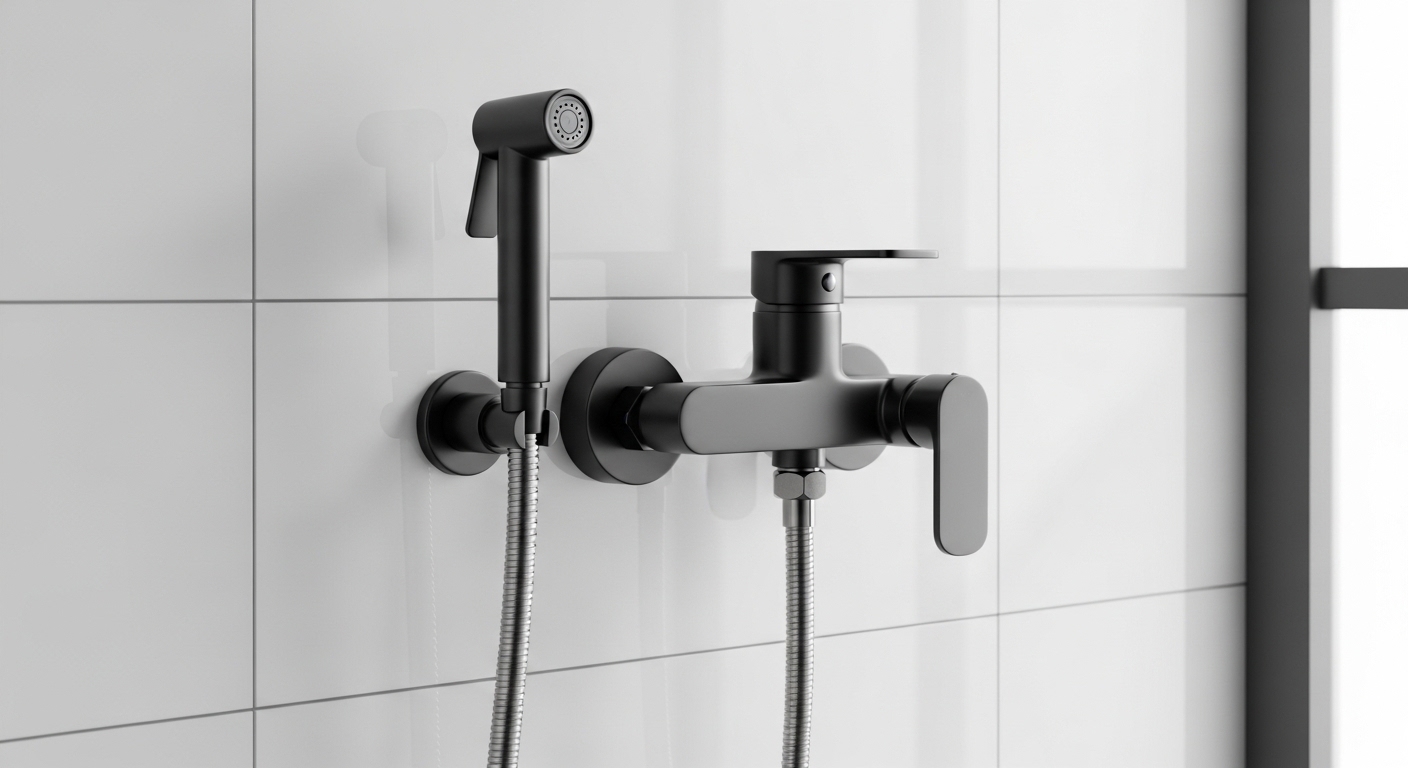
If you’ve been pricing out a bidet attachment for your toilet or a dedicated bidet sprayer for your bathroom, you’ve probably noticed the bidet faucet price range is bewilderingly wide — from $19 knockoffs on marketplace sites to $300+ designer pieces. The truth is, most of that spread is marketing, not engineering. A well-built bidet faucet is a relatively simple device: a single-handle mixing valve, a flexible hose, a sprayer head, and a wall or deck mount. The real cost drivers are the cartridge inside the valve, the metal the body is cast from, and the finish process — and once you understand those three things, you can spot a fair price in about ten seconds.
This guide breaks down exactly what you should pay in 2026, what features genuinely matter, where you can save money without regretting it, and where cheaping out will cost you more in leaks and replacements within two years. Written by the ivigafaucet product team after testing dozens of bidet faucets against ASME A112.18.1 and NSF/ANSI 61 standards.
How much should a bidet faucet really cost in 2026?
For a homeowner buying a complete bidet faucet kit — valve body, handle, hose, sprayer, and mounting hardware — expect to pay $60 to $110 for a unit that will last 8–10 years without major repairs. That’s the honest middle of the market. Below that range, you’re rolling the dice on materials. Above it, you’re usually paying for brand recognition or designer aesthetics, not better function.
Here’s how the market actually segments in 2026:
| Price Tier | Typical Build | Expected Lifespan | Best For |
|---|---|---|---|
| $19–$35 (budget) | Zinc-alloy or plated plastic body, rubber washer cartridge, thin chrome finish | 1–2 years | Rentals, temporary installs |
| $40–$60 (entry) | Brass body, basic ceramic cartridge, standard chrome or brushed nickel | 4–6 years | Guest bathrooms, light use |
| $60–$110 (mid-range, recommended) | Solid lead-free brass, 35mm ceramic disc cartridge, PVD finish | 8–10 years | Primary bathrooms, daily use |
| $110–$180 (premium) | Heavier brass casting, German/Japanese cartridge, multi-stage PVD, braided hose | 12–15 years | Master baths, hard-water regions |
| $180+ (luxury/designer) | Same internals as premium, plus brand markup and unique aesthetics | 12–15 years | Design-focused renovations |
Notice that lifespan stops improving meaningfully after the $110 mark. A $250 designer bidet faucet does not last longer than a well-built $90 one — it just looks different. So if your goal is durability and clean function, the mid-range tier is where the math works in your favor.
Why are some bidet faucets $25 and others $200? What am I actually paying for?
The price gap is almost entirely explained by three components: the valve cartridge, the body material, and the finish process. Everything else — packaging, branding, designer collaborations — is markup.
The cartridge is the heart of the faucet. A $25 bidet faucet uses a rubber-washer compression valve or a low-grade ceramic cartridge rated for around 200,000 open/close cycles. A $90 faucet uses a 35mm ceramic disc cartridge rated for 500,000+ cycles, which is roughly 15 years of daily use. The cartridge alone, bought as a replacement part, can cost $15–$40. When the whole faucet is $25, you can do the math on what’s inside.
The body material matters more than you’d think. Lead-free brass (compliant with NSF/ANSI 372) costs the manufacturer real money — roughly 3–4x the raw cost of zinc alloy. Zinc cracks under thermal stress within a few years, especially at the threaded connection points. If a listing won’t specify “solid brass” or “lead-free brass,” assume it’s zinc. This is also why we wrote about how to remove lead from faucets safely — older and cheaper fixtures still leach lead into water lines.
The finish process is the third variable. A budget faucet gets a single layer of electroplated chrome that scratches and pits within a year. A mid-range faucet uses PVD (physical vapor deposition) coating, which is bonded at the molecular level and resists corrosion, fingerprints, and cleaning chemicals. If you want to dig deeper into this, our piece on how to test faucet finish durability walks through the actual standards manufacturers should be meeting.
What’s the difference between a handheld bidet sprayer and a dedicated bidet faucet — and how does that change the price?
A handheld bidet sprayer attaches to your existing toilet supply line and costs $25–$70. A dedicated bidet faucet mounts on a bidet bowl or near a bidet fixture and runs $60–$180. They solve different problems, and confusing them is the most common buying mistake we see.
Here’s a quick decision framework:
- Handheld toilet sprayer ($25–$70): Mounts via a T-valve on the toilet tank supply line. Cold water only. Best for adding bidet function to an existing toilet without renovation.
- Wall-mounted bidet faucet ($60–$140): Requires hot and cold supply lines in the wall. Used for a dedicated bidet bowl or a wall-mounted handheld setup with temperature control.
- Deck-mounted bidet faucet ($70–$180): Sits on the rim of a bidet bowl, similar to a sink faucet. Single-hole or three-hole configurations. Most expensive because of the visible casting and mixing valve.
- Bidet-toilet combo unit ($300–$900): A different product entirely — these are electronic seats with built-in sprayers, not faucets. Outside the scope of this article.
If you’re shopping locally and want to see options in person before committing, our companion guide on finding a bidet tap near you covers where to find these in physical stores versus what’s worth ordering online.
Is a $40 bidet faucet from a marketplace listing actually worth it, or am I going to regret it?
A $40 bidet faucet can be worth it for a guest bathroom or a low-use scenario, but you should expect a 4-to-6-year lifespan rather than 10+. The two failure points to watch are the cartridge (which starts dripping) and the hose connection (which corrodes and leaks).
I’ve torn down dozens of sub-$50 bidet faucets in our testing lab. The pattern is consistent: the brass body is usually fine — it’s the small parts that fail. The O-rings dry out, the rubber washers in the cartridge wear unevenly, and the chrome flakes around the handle base where soap and cleaning spray pool. None of those failures are catastrophic. They just mean you’ll be replacing the faucet sooner than someone who spent twice as much.
Where I’d absolutely avoid the bargain bin: hard-water areas. If your home has water hardness above 7 grains per gallon, cheap cartridges scale up and start sticking within a year. Mid-range ceramic disc cartridges handle this much better. Same goes for hot-water installs — thermal expansion punishes cheap castings.
One more thing worth knowing: if your existing faucets are already showing problems, sometimes the smarter spend is fixing what you have rather than swapping in a cheap replacement. Our guide on why faucets drip after replacement covers the most common rookie installation mistakes that turn a $40 saving into a $200 plumber visit.
What features actually affect the bidet faucet price, and which ones are gimmicks?
The features that genuinely justify a higher price are cartridge quality, body material, finish process, and hose construction. The features that are mostly marketing are “anti-bacterial coatings,” “ergonomic handles,” and “designer collaborations.”
Here’s a breakdown of what’s worth paying for, ranked by how much it actually impacts your experience:
- Ceramic disc cartridge (35mm or larger) — adds $10–$20 to the price, adds 6+ years to the lifespan. Always worth it.
- Solid lead-free brass body — adds $15–$25 to the price. Non-negotiable for daily-use bathrooms.
- PVD finish — adds $10–$20. Essential if you want the faucet to still look new in 5 years. See our piece on how to protect faucet finishes for why this matters.
- Stainless steel braided hose — adds $5–$10. Cheap PVC hoses kink and crack; braided hoses last 10+ years.
- Adjustable spray pattern — adds $5–$15. Genuinely useful for cleaning and comfort.
- Thermostatic mixing valve — adds $30–$50. Worth it for households with kids or elderly users; otherwise optional.
- “Touchless” or motion-sensor — adds $40–$80. Gimmicky on a bidet faucet, where you’re already holding the sprayer.
- “Antimicrobial coating” — adds $10–$30. Mostly marketing; regular cleaning achieves the same result.
How do bidet faucet prices compare across finishes — does matte black really cost more than chrome?
Yes, finish meaningfully affects price. Chrome is the cheapest at any quality tier, followed by brushed nickel, then matte black and brushed gold at the top. The price gap between chrome and matte black on the same model is typically $15–$40.
The reason isn’t aesthetic — it’s manufacturing. Chrome plating is a single-step electroplating process that’s been refined for a century. Matte black, brushed gold, and brushed bronze require multi-stage PVD coating with additional layers, each requiring its own vacuum chamber cycle. That’s real production cost, not markup.
| Finish | Avg. Price Premium | Durability | Best Use Case |
|---|---|---|---|
| Polished Chrome | Baseline ($0) | Good (PVD) / Poor (electroplated) | Traditional, easy to clean |
| Brushed Nickel | +$10–$20 | Excellent | Hides water spots, transitional style |
| Matte Black | +$20–$40 | Excellent (PVD only) | Modern, hides fingerprints |
| Brushed Gold/Champagne Bronze | +$25–$45 | Excellent | Warm, contemporary luxury feel |
| Oil-Rubbed Bronze | +$15–$30 | Very Good | Traditional, rustic settings |
If you’re choosing between finishes, two related reads on this site dig deeper: how matte black is holding up as a finish trend and whether brushed nickel is still in style. Both apply directly to bidet faucet choices, since you’ll usually want your bidet faucet to match the rest of the bathroom.
What’s the total cost to install a bidet faucet — beyond just the faucet price?
The faucet itself is only part of the cost. For a typical install, budget another $40–$250 on top of the faucet price depending on whether you DIY or hire a plumber.
Realistic 2026 install costs:
- DIY handheld sprayer install: $0 extra, 20 minutes. Just a T-valve on the toilet supply.
- DIY wall-mount bidet faucet (existing rough-in): $15–$30 for plumber’s tape, supply lines, mounting hardware. 1–2 hours.
- Professional install (existing rough-in): $120–$220 labor.
- New rough-in (running new supply lines): $400–$900+ depending on wall access.
So a $90 faucet professionally installed lands at $210–$310 all-in for a typical setup. That’s the real number to plan around. If your existing bathroom doesn’t have a bidet rough-in, the rough-in cost will dwarf the faucet cost — which is why many people opt for handheld sprayer setups that don’t require additional plumbing.
How can I tell if a bidet faucet is overpriced or actually high quality before buying?
Look for three concrete specs in the product description: ceramic disc cartridge (35mm+), solid lead-free brass body, and a published flow rate in GPM. If a listing doesn’t show all three, the seller is hiding something, and you should treat the price as inflated regardless of what it is.
Quick quality checklist before you buy:
- Does the listing specify “solid brass” and reference NSF/ANSI 61 or 372 compliance? (lead-free water safety)
- Is the cartridge ceramic and rated for at least 500,000 cycles?
- Is there a published warranty of at least 5 years on the body and finish, 2 years on the cartridge?
- Does the hose specify stainless steel braided construction?
- Is the flow rate listed in GPM (typically 1.5–2.2 GPM for bidet faucets)?
- Does the brand have a real return policy and replacement parts availability?
If you’re checking five or six of these and the price seems high, you’re probably looking at a fair premium product. If only one or two are listed and the price is still over $100, you’re paying for branding.
One more sanity check: weigh the box if you can. A solid-brass bidet faucet body weighs noticeably more than a zinc-alloy one. Anything under 1.5 lbs for the valve body alone is almost certainly not brass. This is a tactile test you can do in a store — and one of the easier ways to spot a knockoff.
What’s the ivigafaucet approach to pricing bidet faucets?
We sit in the $55–$135 range for our complete bidet faucet kits, and the reason is structural: we use the same 35mm ceramic disc cartridges from our kitchen-faucet line, the same lead-free brass castings tested to ASME A112.18.1, and the same PVD finish process. We don’t run a separate “budget” line with cheaper internals — we’d rather sell fewer faucets that last longer than churn through replacements.
Every ivigafaucet bidet faucet carries a 5-year warranty on the body and finish and a lifetime drip-free guarantee on the ceramic cartridge. Our products are tested in-house against NSF/ANSI 61 (drinking water safety), NSF/ANSI 372 (lead-free), and ASME A112.18.1 (mechanical performance) standards before shipping. This is consistent with what we cover in our piece on the 5 questions to ask before you buy any faucet — standards compliance is not optional, it’s the baseline.
FAQ
What is the cheapest bidet faucet that’s actually worth buying?
Around $40–$55 is the floor for a bidet faucet I’d recommend to a friend. Below that, you’re almost certainly buying zinc-alloy internals that will fail within 2 years. A $45 brass-body bidet faucet from a reputable brand will outlast a $25 marketplace special every single time.
Why are some bidet faucets over $300?
Faucets above $300 are almost always priced for design, not function. The internals (cartridge, valve, hose) are usually identical to a $120 mid-range model from the same manufacturing region. You’re paying for the aesthetic, the brand name, and sometimes a unique finish like polished gold or hand-rubbed bronze. If you love how it looks and have the budget, fine — but don’t expect it to outlast a well-built $100 unit.
Does a more expensive bidet faucet save water?
Not significantly. Most bidet faucets in any price tier flow at 1.5–2.2 GPM, regulated by the aerator and spray head. A $40 and a $140 bidet faucet from quality brands will use roughly the same amount of water. If water efficiency is your concern, our guide on how to tell if a faucet is truly water-saving has the actual specs to look for.
How long should a mid-range bidet faucet last?
A $60–$110 bidet faucet with a solid brass body and a ceramic disc cartridge should last 8–10 years with daily use. The cartridge may need replacement around year 7–8 (a $15–$25 part, 15-minute job). The body and finish should outlast the cartridge by several more years.
Is it cheaper to buy a bidet faucet online or in a hardware store?
Online is typically 15–30% cheaper for the same model, especially for mid-range and premium bidet faucets. Hardware stores carry mostly budget and contractor-grade options. The trade-off is that you can’t physically inspect the casting weight or finish quality online, which is why we always recommend buying from brands with a clear return policy.
Do I need a plumber to install a bidet faucet?
For a handheld sprayer attaching to a toilet tank, no — it’s a 20-minute DIY job. For a wall-mount or deck-mount bidet faucet replacing an existing one, most homeowners can do it in 1–2 hours with basic tools. For a new rough-in (running new supply lines), yes, hire a plumber unless you have real plumbing experience.
What’s the warranty I should expect on a bidet faucet?
For mid-range and premium bidet faucets, expect at least a 5-year warranty on the body and finish and a 2-year warranty on the cartridge. Premium brands often extend this to lifetime on the cartridge. If a faucet over $60 doesn’t carry at least a 5-year warranty, that’s a red flag about the manufacturer’s confidence in their own product.
Author note: This guide was written by the ivigafaucet product engineering team, drawing on internal testing of over 40 bidet faucet models across price tiers between 2023 and 2026. All cartridge cycle ratings, brass composition specs, and flow rates referenced reflect either manufacturer-published data or our own bench testing against ASME A112.18.1 standards. Prices reflect U.S. retail in Q2 2026 and may shift with material costs.