 iVIGA Faucet Online Shop

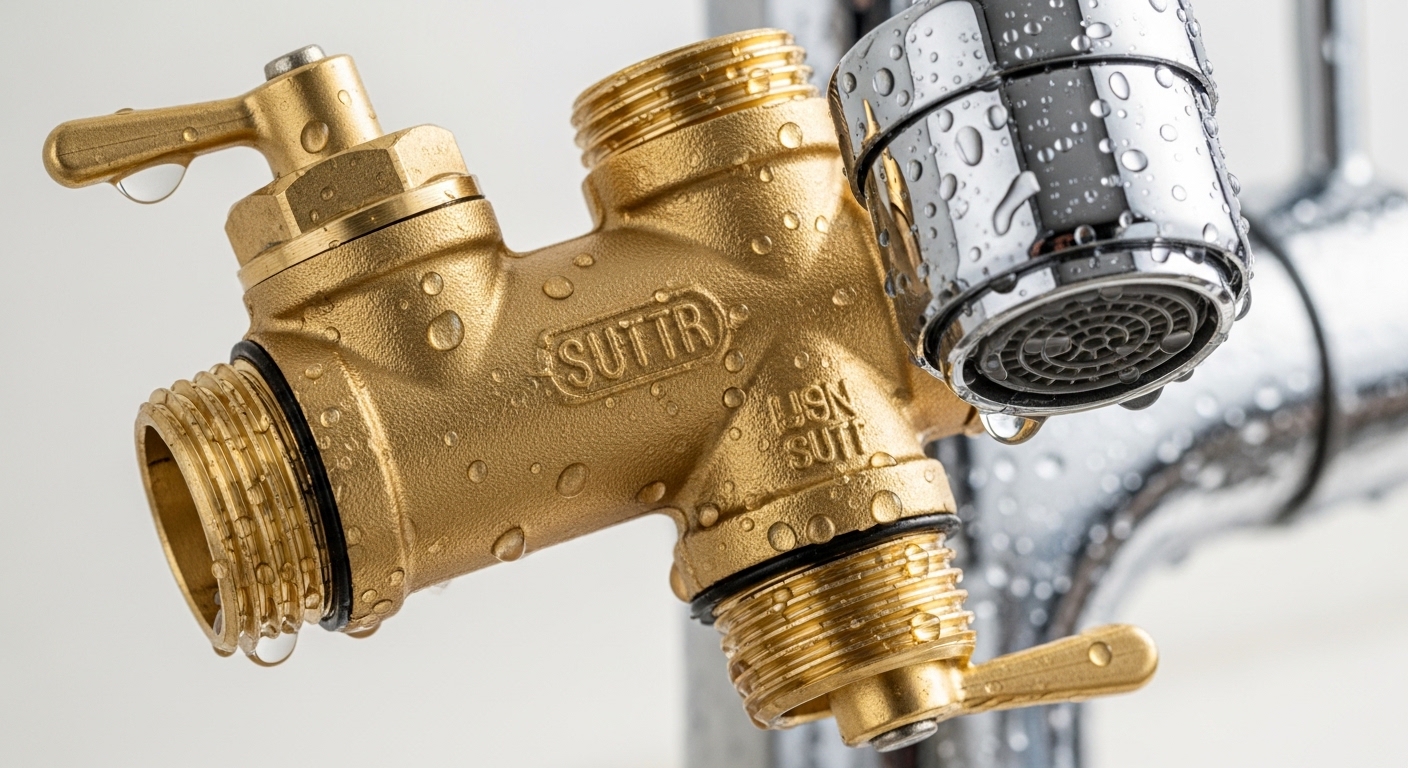
If you’ve ever wanted two things running off one faucet — a portable dishwasher and your normal tap, or a countertop water filter that still lets you rinse dishes — a sink y adapter is the cheap, five-minute answer. It’s a threaded splitter that screws between your faucet (or under-sink valve) and whatever you’re connecting, turning one water outlet into two. The catch is that “sink Y adapter” covers at least four different thread systems, and buying the wrong one is the single most common reason people end up with a leaking, cross-threaded mess under the counter.
Below is the plain-English version of what these adapters actually are, how to know exactly which one fits your setup, and what separates a $6 part that drips in a month from a $20 part that outlives the faucet.
What exactly is a sink Y adapter, and what does it do?
A sink Y adapter is a single-inlet, dual-outlet fitting that takes one water source and gives you two independently usable outputs. The “Y” (sometimes sold as a “T-splitter” or “two-way diverter”) describes the shape: water comes in the bottom and branches into two arms, usually with a small valve on each arm so you can turn one side on and the other off.
People reach for one in a handful of very specific situations:
- Running a portable/countertop dishwasher off the kitchen faucet while keeping the tap usable.
- Feeding a countertop or under-sink water filter without giving up the main spout.
- Splitting an outdoor spigot so a hose and a drip line both run at once (the garden-hose-thread version).
- Adding a bidet sprayer or handheld off a bathroom or utility supply line.
- Connecting an RV or camper city-water line plus a fill hose from one bib.
The key thing to understand: a Y adapter splits flow, it doesn’t boost it. Your total water pressure and volume stay the same and get shared between the two outlets. Run both branches wide open and each side gets roughly half. That’s fine for most home uses, but it’s why you don’t want to feed, say, a pressure washer and a sprinkler off the same cheap splitter and expect full performance on both.
Which sink Y adapter thread size do I actually need?
You need to match your Y adapter to the thread it screws onto — and there are four common ones. Look at where you’re connecting, identify the thread, and buy the matching adapter. That’s the whole game. Get this right and installation is genuinely a 60-second job with no tools.
Here’s how the common connection points break down:
| Where you’re connecting | Thread type | Typical size | Best Y adapter to buy |
|---|---|---|---|
| Kitchen/bath faucet spout tip (aerator) | Faucet aerator thread | 55/64″-27 male or 15/16″-27 female (regular size) | Aerator-thread faucet splitter with dual valves |
| Under-sink shut-off / supply riser | Compression / BSP | 3/8″ compression or 1/2″ NPT | Brass 3/8″ tee splitter with two outlets |
| Outdoor spigot / hose bibb / utility sink | Garden hose thread (GHT) | 3/4″ GHT | Brass 2-way hose Y splitter with valves |
| Bathroom faucet / bidet feed | Faucet or 7/16″–1/2″ | Varies — measure it | Small brass T-adapter sized to your line |
The most-searched version by far is the faucet aerator splitter. To fit it, unscrew the aerator at the tip of your faucet spout (usually by hand, or with pliers and a rag). Look at the threads: if they’re on the outside of the spout tip, you have male threads and need a female adapter; if they’re recessed inside, you have female threads and need a male adapter. Standard North American kitchen faucets are 55/64″-27 (male) or 15/16″-27 (female). A good aerator-thread Y adapter ships with washers and a small dual-thread kit so it mates with either, which is why those are the safest buy if you’re unsure.
How do I know if my faucet has male or female threads?
Unscrew the aerator and feel where the threads sit. If the threaded ring is on the outside surface of the spout (the adapter would slide over it), it’s male. If the threads are hidden up inside the spout (the adapter screws up into it), it’s female. If you’re truly stuck, take the removed aerator to a hardware store or measure the outer diameter: about 22 mm across the male thread is the standard “regular” size, while 24 mm is “junior/large.” Cache-style faucets with hidden aerators may need a proprietary key — those are the one case where a universal splitter won’t fit, and you’ll want a brand-specific part instead.
Is a brass sink Y adapter worth it, or is plastic fine?
For anything permanent or pressurized, buy solid brass; plastic is only fine for temporary, low-pressure, indoor use. This is the one place a few extra dollars genuinely pays off. Here’s the honest trade-off.
| Feature | Solid brass Y adapter | Plastic (ABS/PVC) Y adapter |
|---|---|---|
| Typical price | $12–$25 | $5–$10 |
| Lifespan under daily use | Years; often outlasts the faucet | Months to a couple years |
| Handles hot water | Yes, no warping | Can soften/warp over time |
| Valve durability | Metal or ceramic — smooth for years | Plastic valves crack and seize |
| Best use | Dishwasher, filter, permanent split | Temporary hose, occasional outdoor use |
The failure point on cheap splitters is almost never the body — it’s the little shut-off valves. Plastic thumb-valves crack at the pivot, and the seals harden. A brass adapter with metal or ceramic-disc valves keeps turning smoothly for years and won’t warp when you run hot water through it (important for dishwasher connections). If the adapter will carry hot water or stay installed long-term, brass is the only answer that makes sense. If it’s a summer-only garden splitter you baby-sit, plastic will get you by.
One more spec worth checking: look for adapters rated to at least 100–150 PSI and, if it’s food/drinking-water related (like a filter feed), one that’s lead-free / NSF-372 compliant. Any reputable brand — us included — will list that on the packaging or spec sheet. If a listing won’t tell you the pressure rating or material, that silence is your answer.
How do I install a sink Y adapter without it leaking?
Install it hand-tight plus a quarter turn, with the supplied washer seated and PTFE tape on any tapered threads — that’s what stops 90% of leaks. Aerator-thread and garden-hose splitters seal with a rubber washer and do not need tape; over-tightening them actually deforms the washer and causes leaks. Compression and NPT fittings, on the other hand, do want a few wraps of PTFE (plumber’s) tape.
Here’s the clean method for a faucet-tip Y adapter:
- Unscrew your existing aerator from the faucet spout. Hand-tight usually, or use pliers with a cloth so you don’t scratch the finish.
- Check the washer inside the adapter is seated flat — a cocked washer is the #1 leak cause.
- Thread the Y adapter on by hand, straight and slow, so you don’t cross-thread. It should spin freely for several turns before snugging up.
- Snug it hand-tight, then about a quarter turn more with pliers-and-rag if needed. Stop the moment it feels firm.
- Turn the water on with both branch valves closed, then open each valve one at a time and watch the joint. A weep at the top means re-seat the washer; a weep at a branch means tighten that hose connection.
If you’re splitting under the sink at the supply valve instead of at the spout, that’s a slightly different job — you’re working with compression fittings, and it overlaps a lot with a standard single hole kitchen faucet installation, where you’re also connecting supply lines to shut-offs. Same tools, same PTFE-tape discipline, same “hand-tight plus a bit” rule.
Do I need plumber’s tape on a sink Y adapter?
Only on tapered threads, not on washer-sealed ones. If your adapter connects with a flat rubber washer (aerator splitters, garden-hose Y’s), skip the tape — the washer does the sealing and tape just gets in the way. If it connects with tapered NPT or BSP threads that seal metal-on-metal (many under-sink and pipe fittings), wrap the male thread 3–4 times clockwise with PTFE tape before assembly. When in doubt: washer = no tape, no washer = tape.
Can one sink Y adapter run a dishwasher and the faucet at the same time?
Yes — that’s one of the most popular uses, but you generally run them one at a time, not both wide open. A portable dishwasher’s quick-connect hooks to one branch of the Y adapter while your spout stays on the other. When the dishwasher runs, you close its valve during fill/drain cycles as the machine controls flow; when you want the tap, you open the faucet branch. Because the adapter shares one pressure source, running both full-bore just gives each half the flow — fine for rinsing while the dishwasher idles, not ideal for two heavy demands at once.
For this job specifically, get a brass, hot-water-rated aerator splitter with a threaded outlet that matches your dishwasher’s quick-connect coupler (most use 55/64″-27). Confirm the connector diameter before buying — a mismatch here is the classic “it arrived and doesn’t fit the dishwasher hose” complaint. And because dishwasher lines run hot, this is a case where plastic is a genuinely bad idea; the valve will warp.
If your goal is instead a permanent filtered-water setup, you may be better served by a dedicated line rather than a splitter. A Y adapter is quick, but a plumbed-in solution — the kind of thinking behind a good faucet water line filter — gives you cleaner aesthetics and no fitting hanging off your spout. And if you already added a filter and later see drips at the base of the faucet, don’t assume the Y adapter is the culprit; spout-neck and base leaks usually trace back to a worn gasket, the same way they do with a pull down kitchen faucet gasket.
What’s the difference between a Y adapter, a diverter, and a splitter?
They overlap, but the distinction is about control. A Y adapter/splitter gives two always-available outlets, each with its own manual valve. A diverter automatically routes water to one path or the other — it’s the little pull-tab on a tub spout that sends water up to the shower, or the mechanism that switches a kitchen faucet between spout and side sprayer. So every diverter is a kind of splitter, but not every splitter is a diverter.
For most sink projects you want the plain manual Y adapter: it’s simpler, cheaper, and there’s less to break. Reach for an automatic diverter only when you need the switching to happen for you (like a shower system). If you’re adding a splitter because your existing sprayer or diverter failed, replacing the worn part is often the smarter fix — the same troubleshooting logic applies whether you’re chasing a bad diverter or a single handle faucet dripping from a worn cartridge.
How long does a sink Y adapter last, and when should I replace it?
A quality brass Y adapter lasts several years — often the life of the faucet — while cheap plastic ones typically start weeping within 6–24 months. Replace yours when you see any of these signs:
- A persistent drip at a branch valve even when it’s fully closed — the internal seal is shot.
- A valve that’s hard to turn or won’t fully shut off — mineral buildup or a cracked plastic valve.
- White crust (limescale) around the threads that keeps coming back after cleaning.
- Reduced flow on both sides that isn’t fixed by cleaning the aerator screen.
In hard-water areas, mineral scale is the real killer — it seizes valves and roughens seals. Soaking the adapter in a 50/50 white-vinegar solution for an hour once or twice a year clears the buildup and buys you extra life. But once a valve won’t seal, don’t fight it; a new brass Y adapter is under $20 and five minutes to swap.
FAQ
Will a sink Y adapter reduce my water pressure?
Not the pressure itself, but the shared flow. Static pressure stays the same, so a single branch running alone delivers full force. Only when both branches run simultaneously does each get roughly half the volume. For typical home use — dishwasher on one side, occasional rinse on the other — you won’t notice a meaningful drop.
Can I use a garden-hose sink Y adapter on my kitchen faucet?
Not directly — the threads are different. Kitchen faucets use 55/64″-27 aerator thread; garden Y-splitters use 3/4″ GHT (garden hose thread). You’d need a faucet-to-GHT adapter in between, which adds a leak point. It’s cleaner to just buy the correct aerator-thread Y adapter for indoor sink use and keep the GHT splitter for the outdoor spigot.
Are brass sink Y adapters safe for drinking water?
Yes, as long as they’re labeled lead-free / NSF-372 compliant. Standard “yellow” brass can contain trace lead, so for anything feeding a drinking-water filter or tap, choose an adapter that explicitly states lead-free or low-lead brass. Reputable manufacturers list this; if a product page is silent on materials, treat that as a reason to keep shopping.
Why is my sink Y adapter leaking at the top where it meets the faucet?
Almost always a washer problem. Either the rubber washer is missing, cracked, or seated crooked, or you over-tightened and deformed it. Unscrew the adapter, inspect and reseat (or replace) the washer flat in its groove, then hand-tighten plus only a quarter turn. If it still weeps, your faucet threads may be worn or an odd size, and a dual-thread universal adapter will seal better.
Do I need a plumber to install a sink Y adapter?
No — an aerator-thread or garden-hose Y adapter is a genuine DIY job with no tools beyond maybe pliers, taking under five minutes. The only time to call a pro is if you’re splitting supply lines under the sink and aren’t comfortable working with compression shut-off valves, or if your faucet has a proprietary hidden aerator that a universal splitter won’t fit.
Which is better for a water filter — a Y adapter or a diverter valve?
For most countertop filters, the diverter valve that ships with the filter is designed for that flow and switches automatically, so use it. A Y adapter is better when you want a permanent second outlet you control manually, or when the filter didn’t include a good connector. Both work; match the choice to whether you want automatic switching (diverter) or independent manual control (Y adapter).
About the author: This guide was written by the product team at ivigafaucet, drawing on hands-on testing of splitters, aerators, and supply-line fittings across standard North American and metric faucet threads. We install these adapters on real kitchen and utility faucets to confirm fit and check for leaks under pressure before we recommend them.
Why trust ivigafaucet: We design and sell faucets, shower systems, and sink fixtures, so we work with these thread standards every day. Our brass adapters are specified in lead-free, low-lead brass, pressure-tested to residential standards, and backed by our warranty. When we cite a size or PSI rating, it’s from the spec sheet — not a guess — and we’d rather tell you a cheap plastic part won’t last than sell you one twice.